

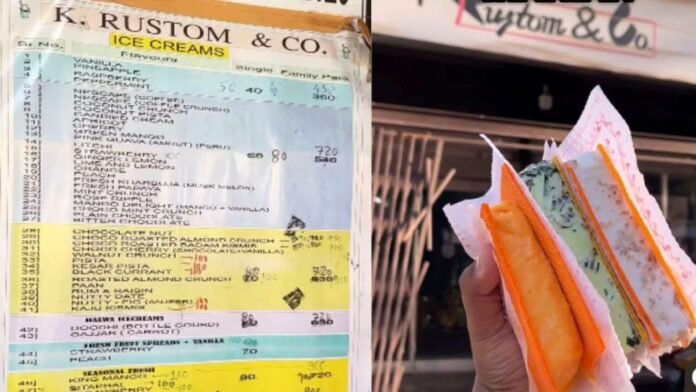
For generations of Mumbaikars, a visit to K. Rustom & Co. at Churchgate was more than just an ice cream outing, it was a cherished ritual. Long before artisanal gelatos and premium dessert chains became fashionable, this modest corner shop had earned an almost legendary status for its simple yet irresistible ice cream sandwiches. For over 70 years, K. Rustom represented nostalgia, affordability, and timeless flavour. However, in a dramatic turn of events, the iconic establishment has recently found itself at the centre of a food safety controversy.
A Humble Beginning in Post-Independence Mumbai
K. Rustom & Co. traces its roots back to 1953, when it was founded by Rustom Irani, a member of Mumbai’s Parsi community. Situated opposite Churchgate Station, the small family-run shop quickly became a favourite among students, office-goers, cricket fans heading to the nearby Wankhede Stadium, and families looking for a refreshing treat after a day in South Mumbai.
Unlike modern ice cream parlours with elaborate interiors, K. Rustom remained delightfully simple. Customers often stood outside the shop enjoying their desserts, creating a unique street-side culture that became synonymous with the brand.
The Ice Cream Sandwich That Became an Icon

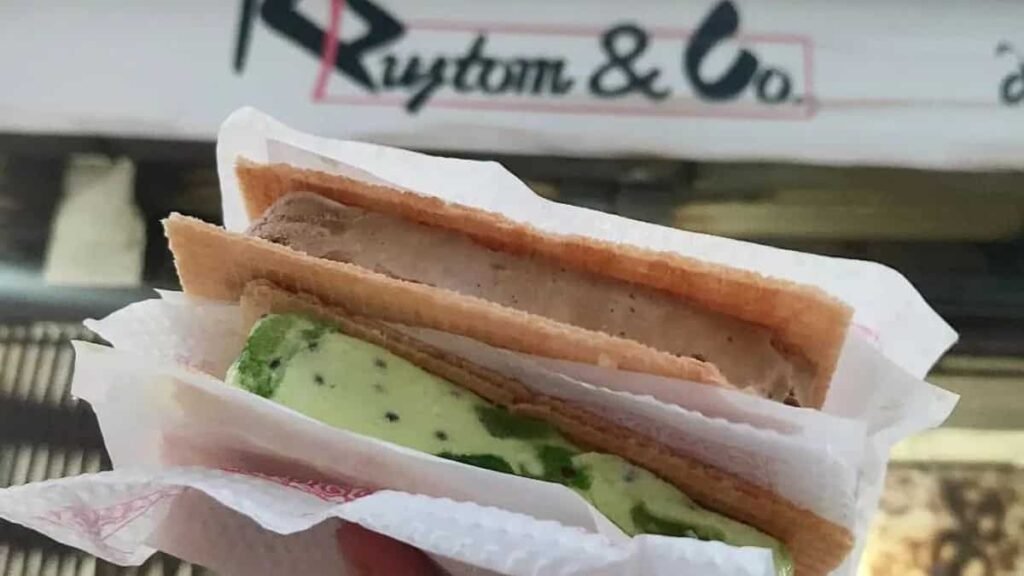
What truly set K. Rustom apart was its signature ice cream sandwich. Instead of serving scoops in cones or cups, the parlour placed thick slabs of handcrafted ice cream between crisp wafers, creating a dessert that was easy to hold, affordable, and immensely satisfying.
Over the years, the menu expanded to include a wide range of flavours such as Mango, Sitaphal (custard apple), Raspberry, Chocolate, Vanilla, Kesar Pista, Butterscotch, Black Currant, Coffee, Walnut, and seasonal fruit specials. The use of fresh ingredients, rich texture, and generous portions helped build a loyal customer base that returned generation after generation.
A Symbol of Old Bombay
More than an ice cream shop, K. Rustom became a symbol of old Bombay’s charm. Tourists considered it a must-visit destination, while countless Mumbaikars associated it with childhood memories, college days, first dates, and family outings. Travel guides, food bloggers, and celebrities frequently recommended the parlour as one of the city’s iconic culinary landmarks.
Its popularity endured despite the arrival of multinational ice cream brands and premium dessert chains. Rather than changing with trends, K. Rustom stayed true to its traditional recipes and old-world appeal, which only strengthened its nostalgic value.
Challenges in a Changing Era
Like many heritage food establishments, K. Rustom faced increasing challenges in recent years. Rising operational costs, changing consumer preferences, intense competition, and stricter food safety regulations made it difficult for legacy businesses to adapt while maintaining their traditional identity.
The parlour’s reputation suffered a major setback in recently, when the Maharashtra Food and Drug Administration (FDA) carried out inspections as part of a statewide crackdown on food establishments. Officials reportedly found serious hygiene violations, including evidence of rats, flies, and poor sanitary conditions inside the premises. Following the inspection, the FDA suspended the establishment’s licence, directing it to undertake corrective measures before resuming operations.
A Legacy Beyond the Controversy
The recent action has undoubtedly cast a shadow over one of Mumbai’s oldest culinary institutions. Yet, for many loyal patrons, K. Rustom’s story cannot be defined solely by its current troubles. For more than seven decades, it introduced generations of Mumbaikars to the simple joy of handcrafted ice cream sandwiches and became woven into the cultural fabric of the city.
Whether the iconic parlour is able to restore its operations and reclaim public trust remains to be seen. But its journey, from a modest family-run shop established in 1953 to one of Mumbai’s most beloved food landmarks, will always remain an important chapter in the city’s rich culinary history.