There are few places that surprise you the moment you arrive. Even fewer that make you rethink what is possible in India’s border districts.
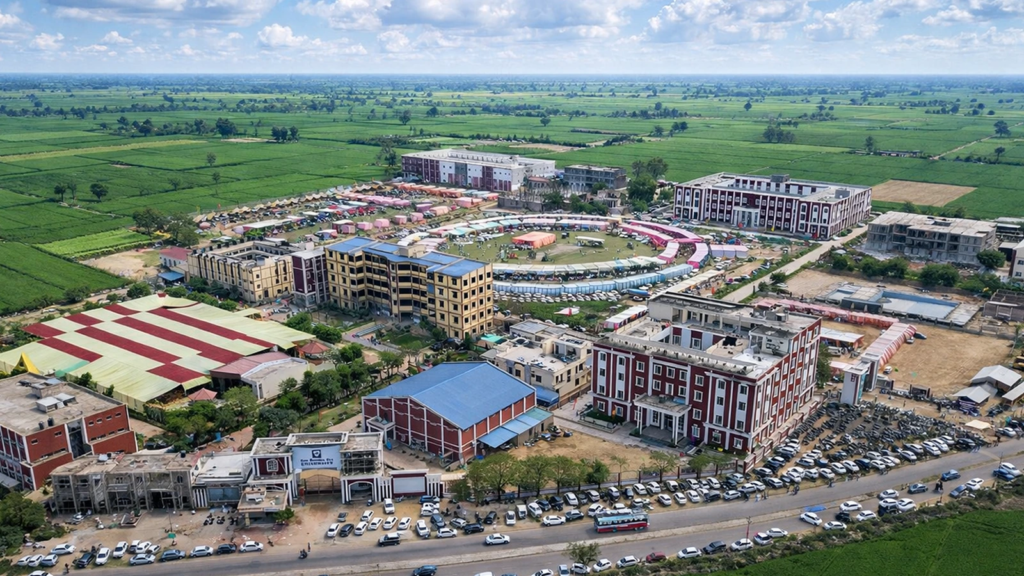
Imagine a sprawling 250-acre campus located at the confluence of three states: Rajasthan, Punjab and Haryana. A place where a university, a defence school and a wellness centre coexist amid lush greenery, wide roads and open skies. It sounds more like a township than an educational institution.
Curiosity led us from Jaipur to Hanumangarh to experience this ambitious project firsthand.
A Journey to Rajasthan’s Green Frontier
The overnight bus from Jaipur rolled into Hanumangarh early in the morning. The city itself offered the first pleasant surprise. Clean roads, abundant greenery and an unhurried pace immediately stood out. While waiting for our cab, we struck up a conversation with a roadside tea vendor, who had already been at work since 5.30 a.m. “My day begins before sunrise and ends late into the night,” he smiled while serving steaming cups of tea.
Soon, we began our drive towards our destination, SKD University (Shri Khushal Das University). The journey itself was refreshing. Endless green fields stretched on either side of the road. Fresh countryside air replaced the dust and traffic usually associated with city travel. The landscape gradually transformed into one that felt peaceful and inviting.
Then came the campus.
A First Impression That Leaves You Speechless
The entrance to SKD University is difficult to miss. Wide roads lined with trees, landscaped gardens and thoughtfully designed buildings spread across an enormous expanse immediately create the impression of entering an integrated educational township rather than a conventional university.
The sheer scale of the campus is perhaps its biggest surprise. Beautifully maintained lawns, open spaces and modern infrastructure blend naturally with the surrounding rural landscape. Our first stop was the Vagbhata Wellness
Where Ancient Wisdom Meets Modern Wellness
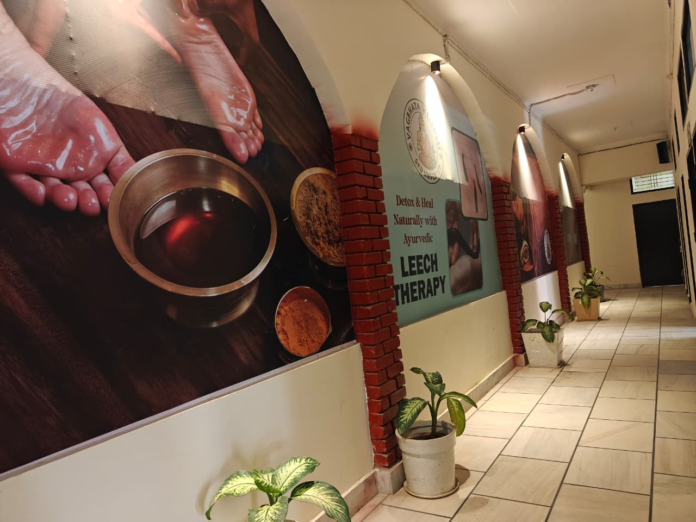
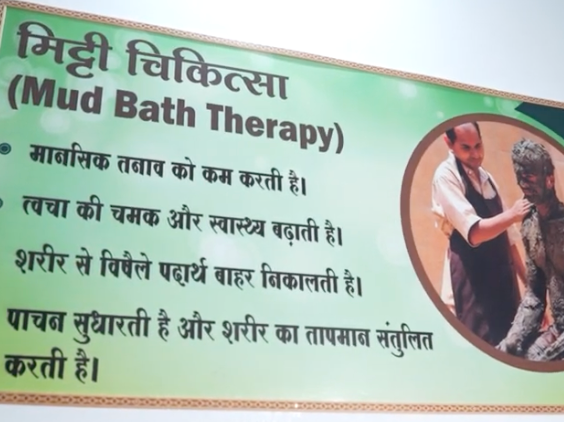
Inside the wellness centre, visitors are greeted with educational displays explaining the significance of traditional Indian food habits. Simple ingredients found in almost every Indian kitchen, dry fruits, spices, milk, herbs and grains, are presented not merely as food items but as preventive healthcare tools.
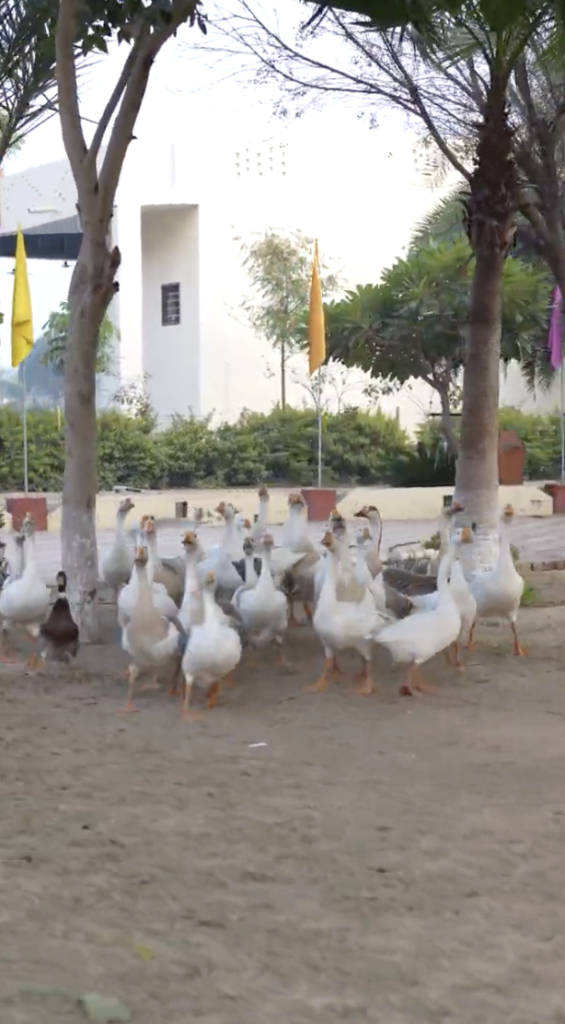
The message is straightforward: wellness begins at home. Outside, the atmosphere continues the same philosophy. Ducks leisurely wander around water bodies, turkeys chatter in the distance and fresh breezes replace the noise of urban life. The environment itself seems designed to slow visitors down.
Unlike conventional hospitals that often feel clinical, the centre offers a calm, nature-filled setting intended to support both physical and mental healing.
An Education Hub Built for the Future
The campus extends far beyond wellness. SKD University offers infrastructure that matches the expectations of modern higher education.
Large playgrounds, academic blocks, skill-oriented courses aligned with evolving employment opportunities, residential facilities and student-centric amenities have all been developed within the same campus. Not to be missed is Mess where food served to students, staff and guests is cent per cent organic, grown within the campus
The vision appears to be creating an ecosystem where education is not confined to classrooms but extends into overall personality development.
Preparing Students Beyond Academics
Sharing the campus is the Good Day Defence School, another striking institution. Its modern infrastructure includes spacious classrooms, sports facilities, multiple swimming pools and even horse-riding training—facilities rarely associated with schools in smaller cities.
The emphasis is clearly on discipline, physical fitness and all-round development rather than academics alone.
The Vision Behind the Campus
The driving force behind this integrated campus is Babulal Juneja, founder of SKD University and the Vagbhata Wellness Centre. Speaking to EBNW Story, Juneja describes the project as part of a larger national vision.
“I want India to excel. Bharat should become a Vishwa Guru. Every institution here has been created with the objective of taking India to the next level.”
For him, wellness is no longer optional. “It has become essential in today’s lifestyle,” he says. According to Juneja, modern health problems often stem from abandoning traditional food habits. “We already have solutions in our kitchens. Our spices, grains and home-cooked meals are powerful. But today’s generation is increasingly attracted towards fast food, and that is becoming a serious health concern.”
Losing Touch with Our Roots
When asked whether children are becoming disconnected from healthy eating habits, Juneja offers a different perspective. “It is not the children who are disconnected,” he says with a smile. “It is the parents.”
He believes families today spend too little time discussing their heritage. “Have parents ever sat with their children and spoken about their grandparents, great-grandparents, family history or the values that shaped them? Have they spoken about the country’s traditions? When those conversations disappear, children naturally drift away from their roots.”
His solution is simple. Families should reconnect over home-cooked food, shared conversations and traditional knowledge that has sustained generations.
More Than a Campus
As we prepared to leave, it became evident that this wasn’t merely a university visit.
The 250-acre campus near the tri-junction of Rajasthan, Punjab and Haryana represents an attempt to blend education, healthcare, sports, environmental consciousness and Indian traditional wisdom into one integrated ecosystem. At at time when the border city faces challenges from drugs being dropped from neighbouring nation, the initiative of Mr Juneja stands tall and full of vision and mission. Around 7000 students studying here have already paved their way to make a bright future and many more students will have a promising future as a medical college has also been granted permission here, said official staff of the university.
Now, when this model becomes a blueprint for future educational institutions remains to be seen.
But one thing is certain: on Rajasthan’s northern frontier, a unique experiment is quietly taking shape, one that seeks to prepare students not just for careers, but for healthier, more rooted lives.
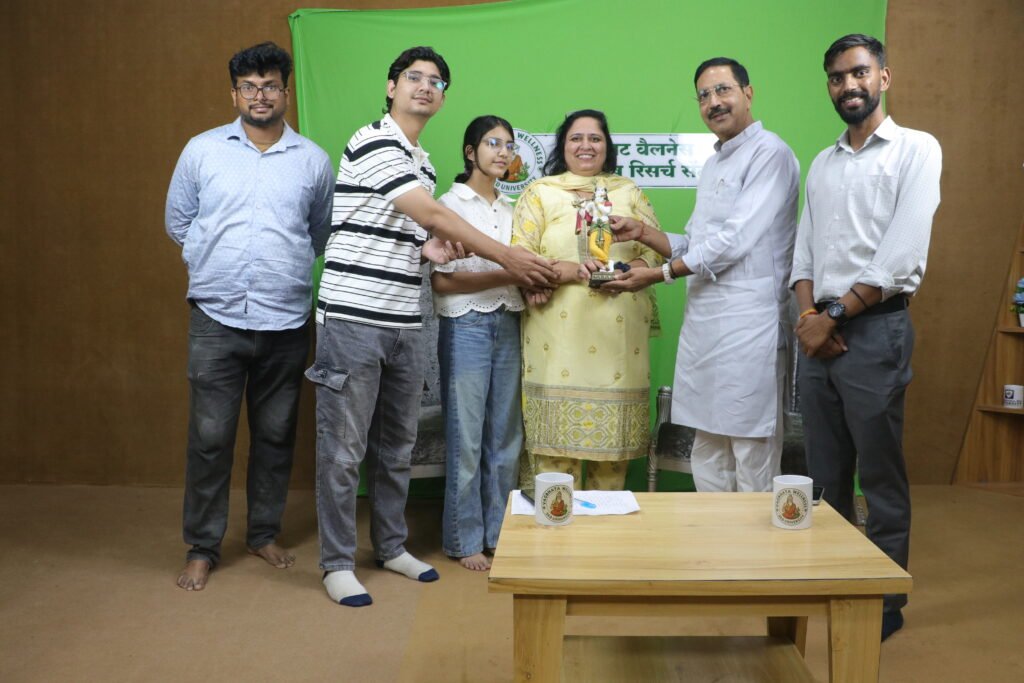
Meanwhile, while returning, we came back with loads of memories and a beautiful gift, a pretty and colourful statue of lord Krishma, whom I call Kanhaji, who showed the Dharma path to world via Gita. So we went as ignorant nomads but found a treasure trove where education and wellness are being redefined with a fresh perspective…