

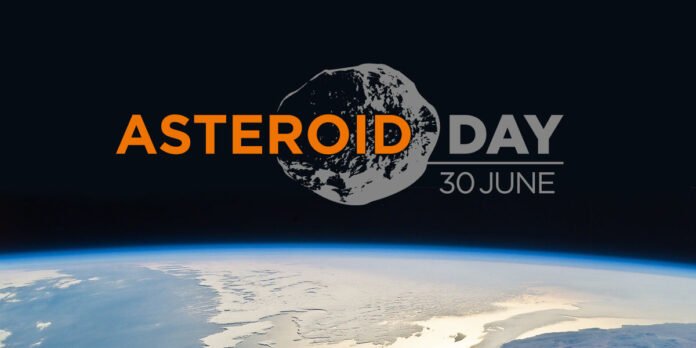
The world is observing International Asteroid Day today, June 30, marking the 10th anniversary of the United Nations-endorsed global awareness campaign dedicated to asteroids, planetary defence, and space science. The annual observance aims to educate people about the importance of detecting and tracking near-Earth objects while promoting international cooperation to safeguard the planet from potential asteroid impacts.
Why is Asteroid Day Observed on June 30?
International Asteroid Day commemorates the Tunguska event of June 30, 1908, the largest asteroid impact in recorded history. A massive explosion over the Tunguska region of Siberia flattened nearly 2,000 square kilometres of forest and destroyed an estimated 80 million trees. Although the asteroid exploded in the atmosphere before reaching the ground, the event remains a stark reminder of the potential threat posed by near-Earth objects.
Recognising the need for greater public awareness, the United Nations officially declared June 30 as International Asteroid Day in 2016, making this year’s observance the tenth anniversary of the global initiative.
Theme: Protecting Earth Through Science
Asteroid Day highlights the importance of planetary defence—the scientific effort to discover, monitor, and, if necessary, deflect asteroids that could pose a risk to Earth. Advances in astronomy, space technology, and international collaboration have significantly improved scientists’ ability to track potentially hazardous objects.
Recent milestones, including NASA’s DART (Double Asteroid Redirection Test) mission, have demonstrated that humanity can successfully alter the path of an asteroid, marking a major breakthrough in planetary defence capabilities.
Global Celebrations and Events
International Asteroid Day 2026 is being marked with a series of educational programmes, public lectures, exhibitions, and virtual events across the world.
The Virtual Telescope Project is hosting live online observations of near-Earth asteroids, allowing people across the globe to witness real-time astronomical observations from their homes.
In India, institutions are organising science outreach programmes to encourage interest in astronomy and space exploration. The Birla Industrial & Technological Museum (BITM), Kolkata, is hosting expert talks, a digital dome experience, and a special science show, while the Amateur Astronomers Association, Mumbai, is conducting workshops and exhibitions focused on asteroid detection and planetary defence.
Internationally, science festivals in countries such as Luxembourg and Portugal are bringing together astronauts, researchers, educators, and students to discuss the latest developments in asteroid research, space missions, and STEM education.
Why Asteroid Day Matters
Thousands of asteroids pass safely near Earth every year, and space agencies continuously monitor them using advanced telescopes and tracking systems. While the chances of a catastrophic impact are extremely low, scientists stress that early detection and global preparedness are essential.
International Asteroid Day serves as a reminder that planetary defence is not the responsibility of a single nation but a shared global effort. By promoting scientific literacy, encouraging research, and inspiring future generations to explore space science, the observance strengthens humanity’s readiness to face one of nature’s rare but significant cosmic hazards.
As the world celebrates International Asteroid Day 2026, the message is clear: understanding our place in the universe begins with protecting the only home we have—Earth.