

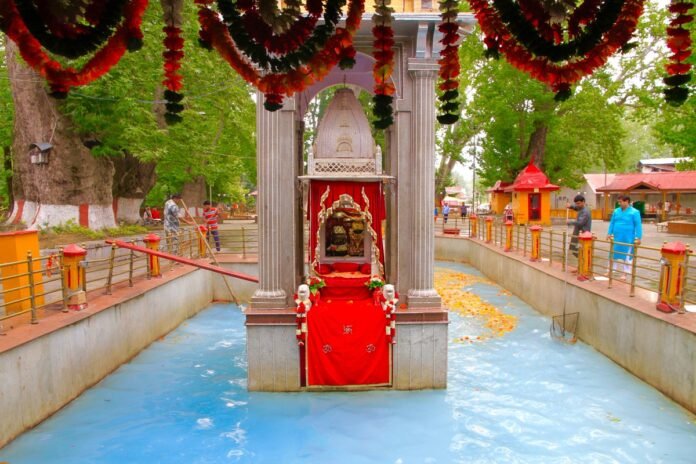
Nestled amidst the serene landscapes of Tulmul village in Kashmir’s Ganderbal district, about 25 kilometres from Srinagar, the Kheer Bhawani Temple stands as one of the most revered shrines of the Valley. Dedicated to Goddess Ragnya Devi, an incarnation of Goddess Durga, the temple is not merely a place of worship but a powerful symbol of faith, cultural heritage, and resilience for the Kashmiri Pandit community.
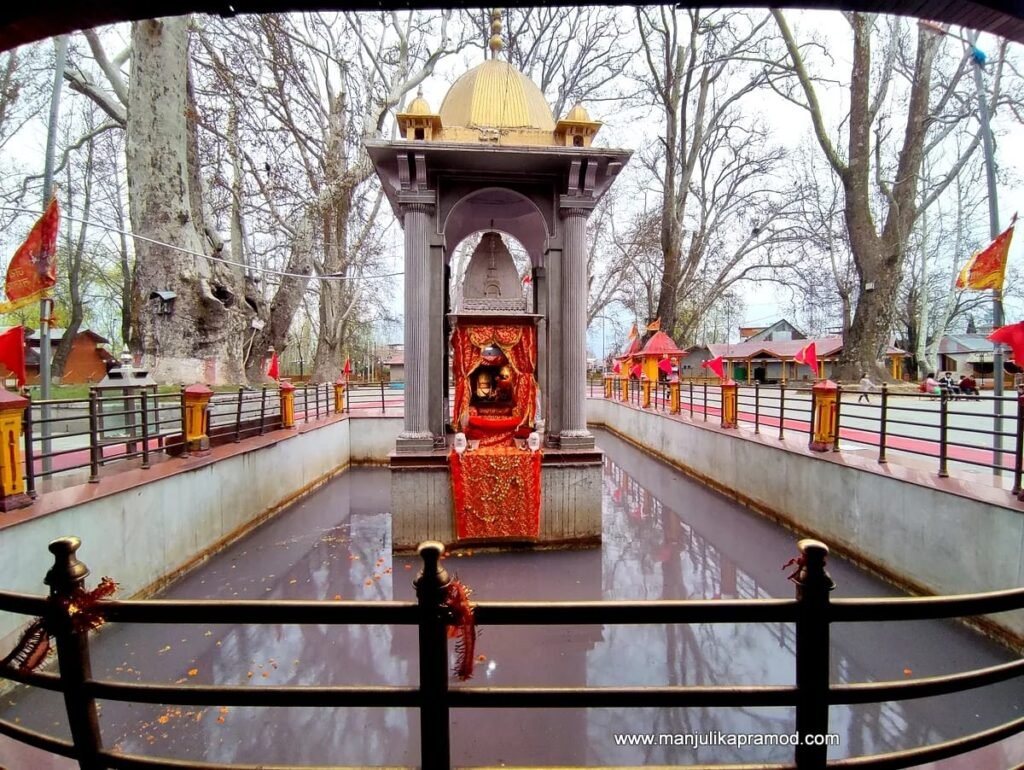
Built in white marble and surrounded by majestic Chinar trees, the shrine is situated at the centre of a sacred spring whose tranquil waters have fascinated devotees for centuries. The peaceful surroundings, coupled with the temple’s deep spiritual significance, make Kheer Bhawani one of the most important pilgrimage destinations in Kashmir.
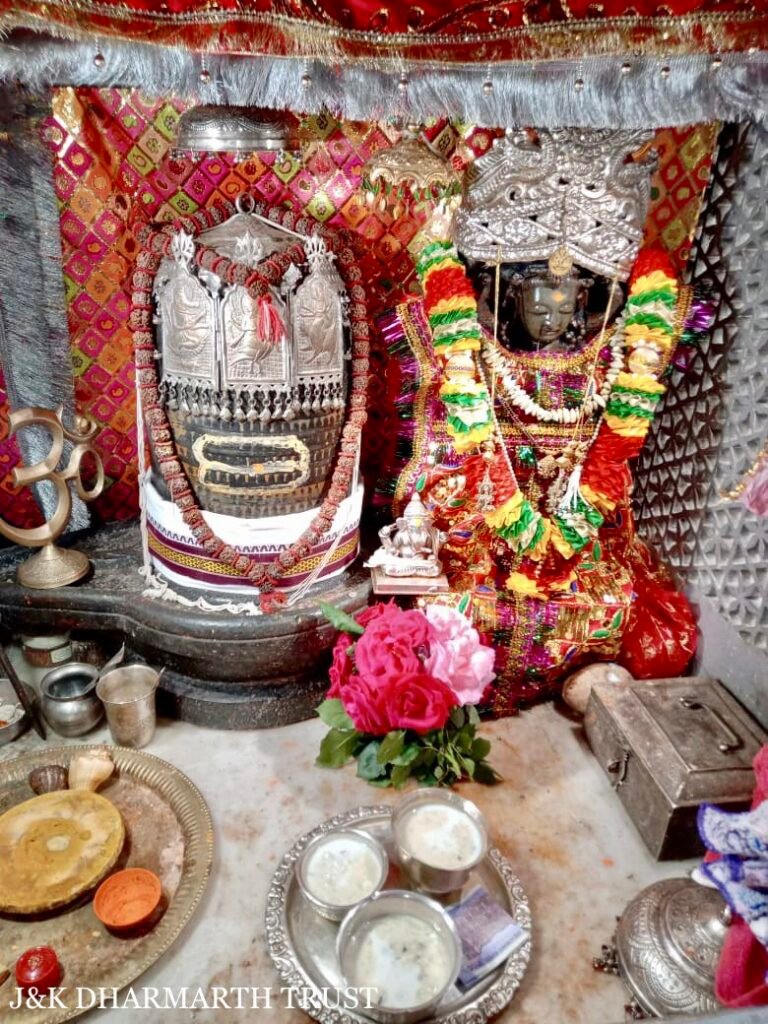
According to legend, Goddess Ragnya originally resided in Lanka and was worshipped by Ravana. However, when Ravana strayed from the path of righteousness, the Goddess chose to leave his kingdom. Lord Hanuman is believed to have carried her to Tulmul, where she eventually established her abode. Since then, the shrine has been regarded as a sacred centre of devotion and spiritual power.
One of the most intriguing aspects of the temple is its holy spring, whose waters are believed to change colour. Devotees regard shades of blue, green, and milky white as auspicious signs, while darker shades are traditionally interpreted as warnings of impending difficulties. Over the years, many believers have associated changes in the spring’s colour with major events in Kashmir’s history. While scientists attribute the phenomenon to natural environmental factors, for devotees it remains a divine expression of the Goddess’s presence and concern for the Valley.
The shrine also occupies a special place in modern India’s spiritual history due to its association with Swami Vivekananda. During his visit to Kashmir in 1898, the great monk is believed to have meditated at Kheer Bhawani and experienced a profound spiritual realization. According to accounts of the visit, he received an inner message from the Divine Mother that deepened his understanding of surrender, humility, and faith.
Every year, the temple becomes the focal point of one of Kashmir’s most important religious gatherings, the Kheer Bhawani Mela. Celebrated on the auspicious occasion of Jyeshtha Ashtami, the festival draws thousands of devotees from across India, particularly members of the Kashmiri Pandit community.
In 2026, the Kheer Bhawani Mela was observed on June 22, bringing together pilgrims from different parts of the country in a vibrant celebration of faith and devotion. Devotees offered kheer, flowers, and prayers to Goddess Ragnya Devi, seeking blessings for peace, prosperity, and the well-being of their families. The offering of kheer, a sweet rice pudding, is deeply associated with the shrine and gives the temple its popular name.
Beyond its religious significance, the mela represents the enduring cultural bonds that connect Kashmir’s diverse communities. The festival is often cited as a living example of Kashmiriyat, the Valley’s long-standing tradition of mutual respect, coexistence, and communal harmony. Local Muslim residents actively assist pilgrims and contribute to the smooth conduct of the celebrations, reflecting a shared commitment to preserving Kashmir’s rich cultural traditions.
For visitors, reaching the shrine is relatively easy. Travellers can arrive in Srinagar by air, rail, or road and then proceed to Tulmul via Ganderbal, a journey of about 40 minutes by taxi or local transport. The period between May and October is generally considered the best time to visit, when the weather is pleasant and the Valley is adorned with its natural beauty.
More than a temple, Kheer Bhawani is a living testament to Kashmir’s spiritual legacy. It is a place where mythology, history, faith, and nature converge in remarkable harmony. Whether one visits as a pilgrim, a seeker, or a traveller exploring the cultural landscape of Kashmir, the shrine offers an experience that transcends religion and speaks to the timeless human search for faith, hope, and inner peace.
As thousands gathered once again for the Kheer Bhawani Mela in 2026, the sacred spring of Tulmul continued to reflect not only the devotion of its worshippers but also the enduring spirit of a land where faith and tradition have flourished for centuries.
(The writer of this article is Akhilesh Saproo, a student of grade X, APS Jaipur)