


The story of Maharana Pratap is often told through the Battle of Haldighati. Yet, if Haldighati was the battle that revealed his courage, Dewair was the victory that demonstrated his resilience, military genius, and determination to restore Mewar. Fought in 1582, the Battle of Dewair marked a decisive turning point in Maharana Pratap’s long struggle against the Mughal Empire and laid the foundation for the recovery of much of his kingdom.
In the years following Haldighati, Maharana Pratap faced enormous challenges. Large parts of Mewar had fallen under Mughal control, and imperial outposts had been established across the region. Despite these setbacks, he refused to surrender. Instead, he withdrew into the Aravalli hills, rebuilt his forces, strengthened alliances, and patiently prepared for a counteroffensive.
That opportunity arrived in 1582.
Dewair, located in the rugged Aravalli region between Kumbhalgarh and Madaria in present-day Rajsamand district of Rajasthan, was a strategically important Mughal stronghold. The network of Mughal posts in the area helped maintain imperial control over western Mewar. Maharana Pratap understood that destroying these outposts was essential if Mewar was to regain its freedom.
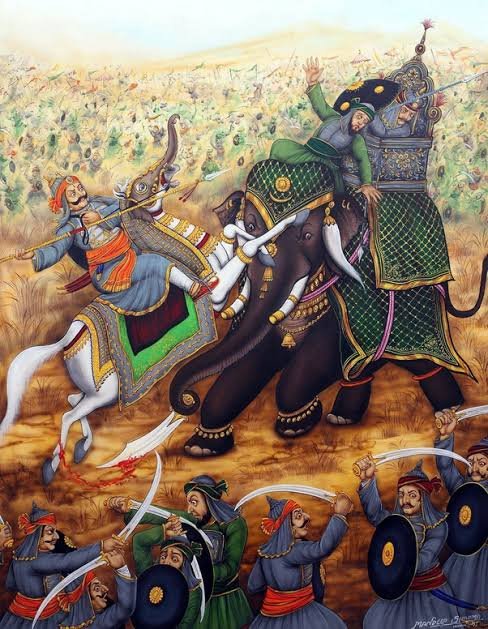
Leading the campaign alongside his son and heir, Kunwar Amar Singh, Maharana Pratap launched a determined assault on the Mughal positions at Dewair. Historical accounts describe fierce fighting in which the Mughal forces were decisively defeated. The victory shattered Mughal authority in the region and triggered the collapse of several imperial outposts across Mewar.
The consequences were far-reaching. Following Dewair, Maharana Pratap regained important territories including Kumbhalgarh, Gogunda, and large parts of western Mewar. Although Chittorgarh and a few strategic centres remained under Mughal control, much of the kingdom was restored to Sisodia rule. For the first time since Haldighati, Mewar was no longer merely resisting, it was recovering.
The importance of the battle was recognised by the renowned British historian Colonel James Tod in his classic work Annals and Antiquities of Rajasthan. Drawing a comparison with ancient Greek history, he famously wrote:
“Haldighati is the Thermopylae of Mewar; the field of Dewair her Marathon.”
Through this comparison, Tod suggested that while Haldighati symbolised heroic resistance against overwhelming odds, Dewair represented the decisive victory that changed the course of the struggle. The phrase “Marathon of Mewar” remains one of the most enduring descriptions of the battle.
Many historians regard Dewair as the true turning point in Maharana Pratap’s career. Before 1582, he was fighting to survive. After Dewair, he was rebuilding his state, restoring administration, and reclaiming lost territory. The battle transformed the narrative of Mewar’s struggle from one of endurance to one of revival.
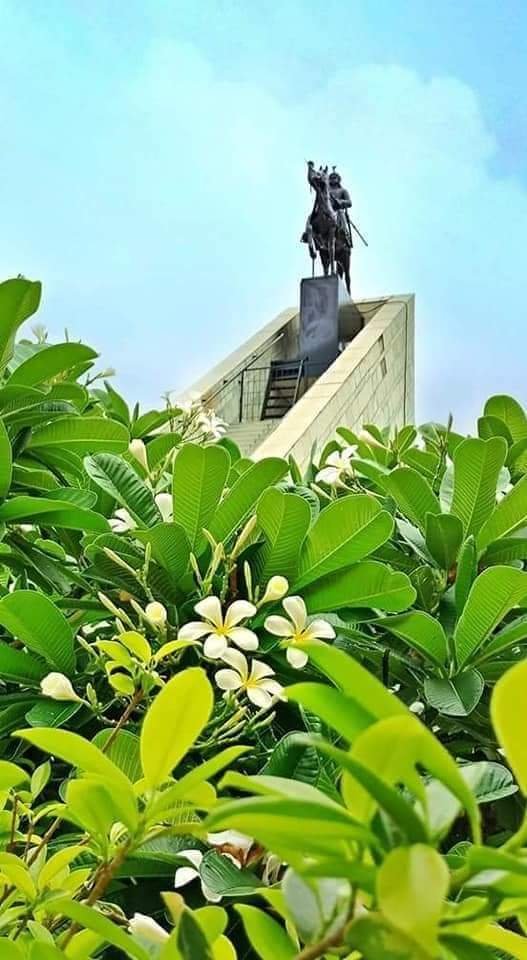
Today, the legacy of that victory is preserved at the Victory Memorial at Dewair in Rajsamand district. Inaugurated in 2012, the memorial commemorates Maharana Pratap’s triumph and stands near the historic battlefield where one of the most significant chapters of Mewar’s history unfolded. Visitors to the site are reminded that the story of Maharana Pratap was not only about resisting a powerful empire but also about reclaiming a kingdom through perseverance, strategy, and unwavering resolve.
More than four centuries later, Dewair remains a symbol of resurgence. If Haldighati tested Maharana Pratap’s spirit, Dewair proved the strength of his vision. It was the victory that revived Mewar and secured his place among the greatest warrior-rulers in Indian history.