

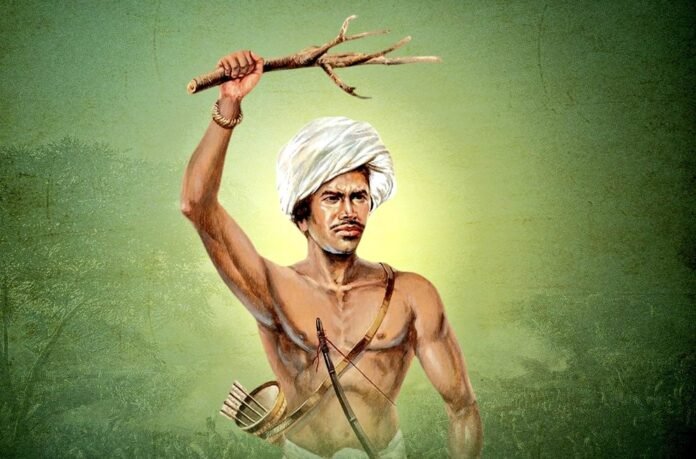
On June 9, India remembers Bhagwan Birsa Munda, one of the most remarkable figures of the country’s freedom struggle and a revered leader of the tribal community. His death anniversary marks not only the loss of a young revolutionary but also the enduring legacy of a leader who fought against colonial oppression, social injustice, and the exploitation of indigenous communities.
Born on November 15, 1875, in Ulihatu village in present-day Jharkhand, Birsa Munda emerged as a powerful voice for the rights of tribal people at a time when British policies and exploitative land systems were disrupting traditional ways of life. Though his life lasted only 24 years, his influence on India’s tribal resistance movement remains profound.
Birsa grew up witnessing the hardships faced by the Munda community under British rule. Tribal lands were increasingly taken over by landlords, moneylenders, and colonial authorities. Forest laws restricted the traditional rights of tribal communities, while economic exploitation pushed many families into poverty and indebtedness.
In response, Birsa launched a movement that combined social reform with political resistance. He urged tribal communities to preserve their cultural identity, reject social evils, and unite against injustice. His message resonated widely across the Chotanagpur region, earning him immense respect among indigenous communities. Followers began referring to him as “Dharti Aaba”, meaning “Father of the Earth.”
The most significant chapter of his struggle was the Ulgulan, or “The Great Tumult,” a mass tribal uprising against British rule and the exploitative land system. The movement sought to restore tribal rights over land and forests while challenging colonial authority. Although the rebellion was eventually suppressed, it forced the British administration to take tribal grievances seriously and led to reforms aimed at protecting indigenous land rights.
Birsa Munda was arrested by British authorities on March 3, 1900, and imprisoned in Ranchi Jail. On June 9, 1900, he died in custody under circumstances that remain a subject of historical debate. The British administration officially attributed his death to cholera, but questions and suspicions regarding the exact cause have persisted for generations.
More than a century later, Birsa Munda’s legacy continues to inspire millions. He is remembered not only as a freedom fighter but also as a symbol of tribal identity, dignity, and resistance. His contributions have received increasing national recognition, and in 2021 the Government of India declared his birth anniversary, November 15, as Janjatiya Gaurav Divas (Tribal Pride Day).
Birsa Munda’s story is a reminder that India’s freedom struggle was not fought only in cities and political assemblies. It was also fought in forests, villages, and tribal regions by leaders who challenged injustice with extraordinary courage. On his death anniversary, the nation pays tribute to a young revolutionary whose vision of dignity, self-respect, and justice continues to resonate across generations.