

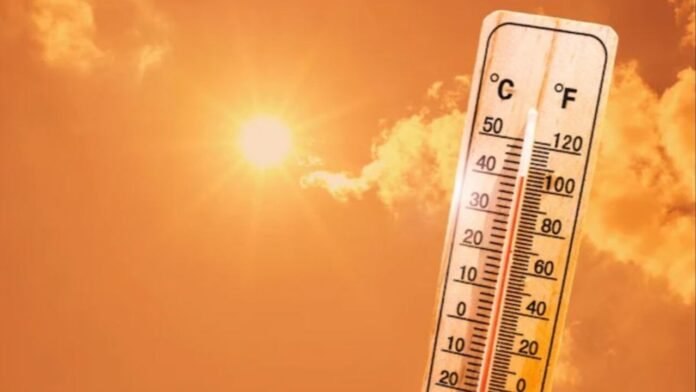
Step Outside for Five Minutes
Step outside for five minutes. Not for a walk. Not for exercise. Just stand under the afternoon sun.
The heat wraps around you like a blanket fresh out of a furnace. The roads shimmer. The air feels heavy. Even the wind no longer feels like relief.
This isn’t a desert.
This is India.
And according to recent warnings from the India Meteorological Department (IMD), this may only be the beginning.
The IMD Forecast Is Sending a Warning
Every morning, millions of Indians check the weather forecast before stepping out. But lately, those forecasts have begun to sound less like routine updates and more like warnings.
“Above-normal temperatures.”
“Heatwave conditions likely.”
“Severe heat stress.”
These phrases are appearing with increasing frequency in IMD bulletins.
The IMD has forecast above-normal temperatures across large parts of the country during June. States such as Uttar Pradesh, Bihar, Haryana, Punjab, Odisha, Chhattisgarh, Gujarat, and Andhra Pradesh are expected to witness more heatwave days than usual.
Weather experts warn that many regions could continue experiencing temperatures well above seasonal averages.
The concern is not just today’s temperature.
It is the trend.
Year after year, the mercury continues to climb.
When Summer Refuses to Leave
For generations, Indians have looked to the monsoon for relief. Dark clouds gather. The first drops of rain fall. The familiar fragrance of wet soil fills the air. Temperatures begin to ease.
But this year, the IMD has projected below-normal rainfall in several regions and warned of uneven monsoon distribution. While some areas may witness intense rainfall, others could continue waiting for relief.
The result is a troubling contradiction:
Floods in one district.
Drought in another.
And relentless heat almost everywhere.
A Country Living Under Weather Alerts
Heatwave warnings have become a regular part of summer life.
Schools alter schedules. Hospitals prepare for heat-related illnesses. Outdoor workers are advised to avoid strenuous activities during peak afternoon hours.
The IMD now routinely issues heatwave alerts across multiple states during the summer months—a reminder of how common extreme heat has become.
What was once considered extraordinary weather is slowly becoming ordinary.
The Science Behind the Rising Heat
Climate scientists point to a combination of factors: rising global temperatures, rapid urbanisation, shrinking green cover, and increasing greenhouse gas emissions.
Together, these forces are creating conditions in which extreme heat is no longer an exception but a recurring reality.
Cities are expanding. Concrete is replacing vegetation. Heat gets trapped in urban landscapes, creating what experts call the “urban heat island effect.” At the same time, global climate patterns continue to push temperatures higher.
The result is a summer season that feels longer, harsher, and increasingly difficult to escape.
The Human Cost Behind the Numbers
Weather reports show temperatures.
But they do not show the farmer looking anxiously at the sky and hoping for rain.
They do not show the labourer working under a blazing sun, the elderly person struggling through a sleepless night, or the child whose classroom becomes unbearable by afternoon.
Behind every IMD forecast is a human story.
Behind every heatwave statistic is a family adapting to conditions that seem to grow more difficult each year.
What the Future Forecast Suggests
The IMD’s seasonal outlooks suggest that heatwaves may become more frequent and more intense across many parts of India.
Combined with changing rainfall patterns, rising temperatures could place increasing pressure on water supplies, agriculture, public health systems, and energy demand.
Experts warn that adapting to these changes will require better urban planning, stronger climate resilience measures, improved water management, and greater public awareness.
The challenge is no longer preparing for a distant future.
It is learning how to live with a reality that is already unfolding.
A Final Thought
Perhaps the most unsettling part is not that India is becoming hotter.
It is that we have slowly started accepting it as normal.
Every year brings another temperature record. Every year the forecasts seem a little more alarming. Yet after a few days of discussion, life moves on.
But what we call “normal” today would have sounded like a warning a decade ago.
And if the IMD’s forecasts continue pointing in the same direction, the hottest summer we have experienced may one day feel like one of the coolest.
(The writer of this article is Anjali)