

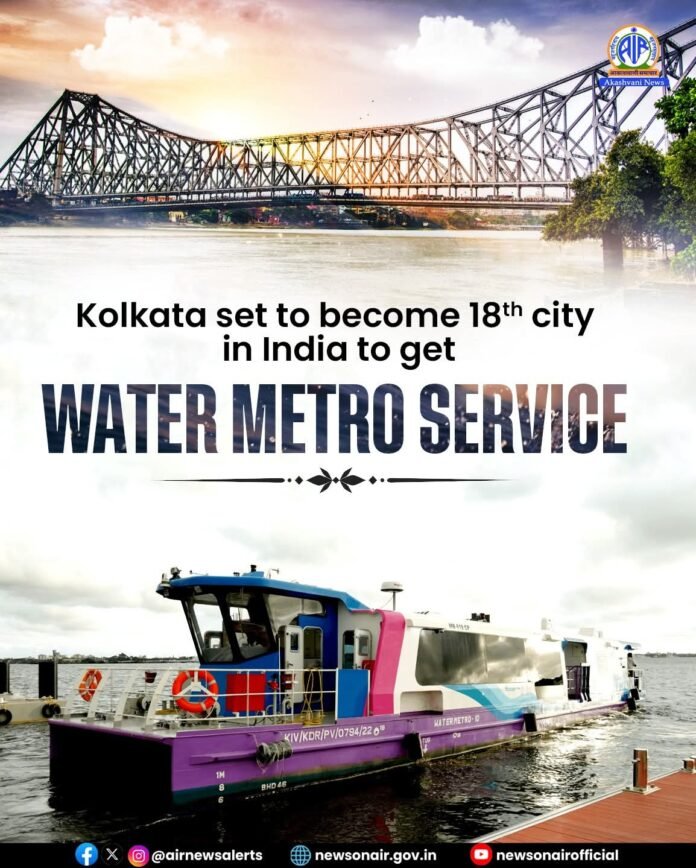
Kolkata, a city shaped by the iconic Hooghly River, is set to become the latest Indian metropolis to embrace water-based urban transportation. The city has been included in the National Water Metro Project, a move that is expected to transform public transport by utilizing the region’s extensive network of rivers and waterways.
The project aims to provide a fast, efficient, and environmentally friendly mode of transport while easing pressure on Kolkata’s already congested road and rail networks. Inspired by the success of the Water Metro system in Kochi, the initiative seeks to integrate waterways into the city’s broader public transportation framework.
As part of the plan, authorities have approved the development of 41 new jetties across Kolkata and its surrounding areas. These jetties will serve as boarding and disembarkation points, helping connect key locations through a network of modern ferry and water transport services. The project is expected to improve last-mile connectivity and provide commuters with an alternative to crowded roads and trains.
Kolkata’s geography makes it particularly well-suited for such a system. The Hooghly River has historically been a vital transportation corridor, supporting trade, commerce, and passenger movement for centuries. By modernizing and expanding water-based transport infrastructure, planners hope to revive the river’s role in urban mobility while reducing travel times and traffic congestion.
The Water Metro is also expected to contribute to environmental sustainability. Compared to conventional road transport, water-based transit can help reduce fuel consumption, traffic-related emissions, and urban pollution. The project aligns with broader efforts to promote greener and more sustainable transportation solutions in India’s rapidly growing cities.
According to reports, the West Bengal government is also considering the creation of a dedicated shipping division to support and manage the expansion of water transport services in the state. Such a move could strengthen the institutional framework needed to develop waterways as a key component of public transportation.
Beyond daily commuting, the project could also provide a boost to tourism. Water transport routes along the Hooghly River would offer passengers scenic views of Kolkata’s historic landmarks, riverfronts, and cultural heritage sites, creating opportunities for both regular commuters and visitors.
Urban planners believe that integrating waterways with existing metro, rail, bus, and ferry services could significantly enhance Kolkata’s transportation ecosystem. A multimodal approach would allow commuters to switch seamlessly between different modes of transport, improving convenience and accessibility.
The inclusion of Kolkata in the National Water Metro Project marks a significant step towards modernizing urban mobility in eastern India. If implemented successfully, the initiative could become a model for other river-based cities seeking sustainable and innovative transport solutions.
For a city often celebrated for its rich history and enduring relationship with the Hooghly River, the Water Metro represents a blend of tradition and innovation—reimagining waterways not just as symbols of the past, but as pathways to the future.