

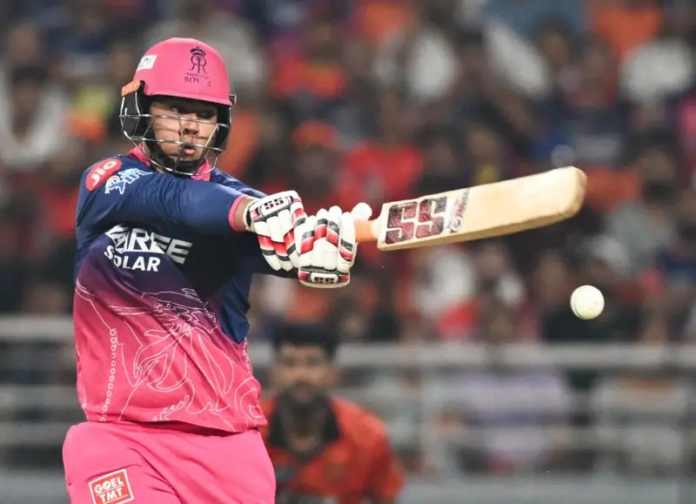
At 15, most teenagers are still figuring out school schedules and career dreams. Vaibhav Suryavanshi is giving management experts a new subject to study.
The teenage cricket sensation, who stunned the cricketing world with a record-shattering IPL season, is now set to enter classrooms—not as a student, but as a case study.
The Indian Institute of Management (IIM) Indore is preparing what it describes as India’s first multidisciplinary study centred on the “Vaibhav Model”—an attempt to decode the making of extraordinary success at an unusually young age. Experts from sports, psychology and management will jointly examine the factors behind Suryavanshi’s meteoric rise.
The timing is hardly surprising.
In IPL 2026, Vaibhav did not merely announce himself—he redefined expectations. At just 15, he smashed 72 sixes in a single season, breaking Chris Gayle’s long-standing record of 59, while amassing 776 runs at a breathtaking strike rate of over 237. He finished as the tournament’s highest run-scorer, winning the Orange Cap and sweeping multiple individual honours.
But IIM Indore believes the real story lies beyond the scorecard.
Director Himanshu Rai says the institute intends to examine not just Vaibhav’s cricketing achievements but the ecosystem that shaped them.
“This study will explore the social, psychological, familial and institutional factors that create young talent capable of delivering extraordinary performances at an early age,” Rai said. According to him, talent may be innate, but sustained excellence is built through values, mental strength, family sacrifice, mentorship and disciplined leadership.
That journey, IIM believes, is what makes Vaibhav extraordinary.
Standing 5 feet 7 inches tall and weighing barely 55 kilograms, Suryavanshi does not fit the traditional image of a power hitter. Yet bowlers across the IPL learned quickly that his bat speed and timing compensate for every physical limitation.
Behind those towering sixes lies years of training.
Vaibhav’s cricketing foundation was laid by childhood coach Manish Ojha before Rajasthan Royals’ development expert Zubin Bharucha refined his technique and bat speed. Rajasthan Royals coach Vikram Rathour has repeatedly praised the youngster’s balance and composure.
His greatest weapon, however, may be his mind.
Cricket analysts estimate that Vaibhav often makes batting decisions in nearly 0.3 seconds—leaving bowlers almost no time to dictate terms. His fearless approach has already become part of IPL folklore. When advised by Rahul Dravid to bat cautiously, Vaibhav reportedly replied: “Sir, let the bowler worry about me.”
That confidence fascinates management experts as much as cricket fans.
Dr. Aarti Chopra, a management faculty member associated with the initiative, believes the study could become valuable for future managers and policymakers seeking to understand how high-performing individuals are nurtured and sustained.
Yet the institute also plans to examine the darker side of early stardom.
Massive contracts, instant fame and relentless social media attention often become burdens rather than rewards. Many gifted youngsters fade under the pressure of expectations and mental exhaustion. Rai believes understanding these vulnerabilities is just as important as celebrating success.
The goal, he says, is not merely to celebrate a cricket prodigy but to design a blueprint for nurturing talent responsibly.
For corporate India, the implications may be equally significant. IIM researchers believe the “Vaibhav Model” could evolve into a fresh framework for talent management—one that explains how exceptional performers emerge, how they sustain excellence and how institutions can help them thrive.
For now, though, the image remains striking.
A 15-year-old who smashed 72 sixes, won five awards and captivated the cricketing world is about to face a different challenge—not bowlers, but professors determined to understand the science behind his genius.