

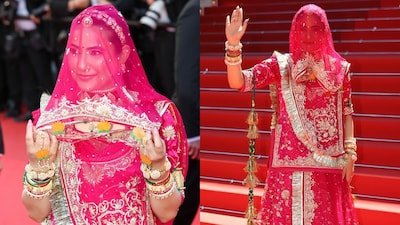
At the 79th edition of the Cannes Film Festival, Indian actress and model Ruchi Gujjar made a striking appearance that went beyond glamour and fashion. Draped in a vibrant pink Rajasthani poshak with a translucent ghunghat, Gujjar used one of the world’s most prestigious red carpets to spark a conversation about women’s freedom, identity, and the social realities surrounding the veil tradition in parts of India.
Her ensemble featured intricate silver embroidery, traditional jewellery, bangles, and a dramatic veil partially covering her face. While the attire celebrated the richness of Rajasthan’s cultural heritage, the symbolism behind the ghunghat became the centre of attention. According to multiple reports, Gujjar clarified that her veil was not meant to represent submission, but resistance against forced customs that continue to restrict women in some communities.
Speaking about her appearance, Gujjar reportedly said that culture should empower women rather than silence them. Her statement highlighted the difference between wearing traditional attire by choice and being compelled to follow practices that limit personal freedom.
The Cannes appearance quickly generated debate across social media and fashion circles. Many praised her for proudly showcasing Rajasthani culture on an international stage, while others appreciated the deeper social message woven into the look. Fashion commentators noted that at an event often dominated by luxury couture and celebrity glamour, Gujjar managed to transform fashion into social commentary.
Her appearance also brought attention to the evolving role of fashion in activism. Increasingly, celebrities are using global platforms such as Cannes not merely for visibility, but to raise discussions around gender, equality, sustainability, and identity. In Gujjar’s case, the ghunghat became both a celebration of heritage and a critique of patriarchal traditions when imposed without choice.
Coming from Rajasthan herself, Ruchi Gujjar’s statement carried personal significance. By combining Rajputana-inspired aesthetics with a message of women’s dignity and freedom, she turned her Cannes debut into one of the most talked-about Indian appearances at the festival this year.