

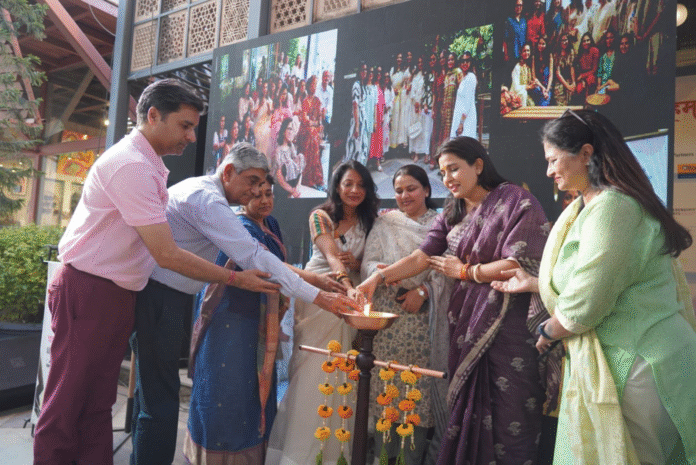
At a time when Jaipur stands at a critical crossroads, facing growing concerns around civic behaviour, encroachments, and the condition of shared spaces that threaten its UNESCO World Heritage status, Maahi Roj 2026 emerges as both a reflection and a response.
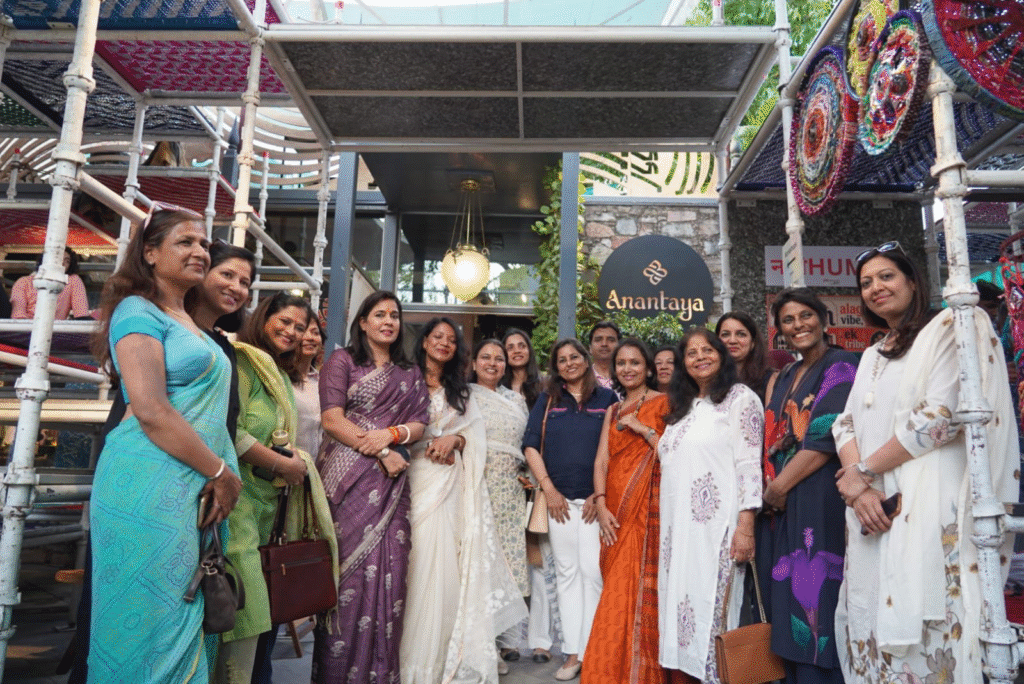
Being held on April 25–26 at Anantaya, Kanota Courtyard, Narayan Niwas Palace, Jaipur, the 12th edition of Maahi Roj brought together thinkers, practitioners, and citizens to engage in a shared conversation on the future of the city. Founded by Geetanjali Kasliwal and Ayush Kasliwal, the platform continues to bridge craft, community, design, and civic consciousness.
This year’s theme, HUMM: Many Makes One, celebrates collective intelligence, emphasising how diverse voices can come together to shape more responsible and interconnected ways of living. The festival was graced by Chief Guest Dr. Somya Gurjar and Guest of Honour was Malvika Bagaria.
Setting the Tone: From ‘I’ to ‘Hum’
The inaugural address by Geetanjali Kasliwal set a clear and compelling direction for the festival. Speaking about the essence of HUMM, she noted, “HUMM is about how we begin to listen, respond, and act together—not as individuals, but as part of something shared.”
The opening session, Sohum – From I to Hum, featuring Ankur Mehta, Namita Jain, and Ani Setia, reflected this shift from individual awareness to collective responsibility. This was followed by Tell Me What You Eat and Your Plate is a Civic Act by Monali Jain, reframing everyday choices as acts of civic participation.
A keynote by Ami Shroff brought insights from Bhuj to Jaipur, highlighting the relationship between craft, community, and sustainable futures.
Conversations that Shape Cities
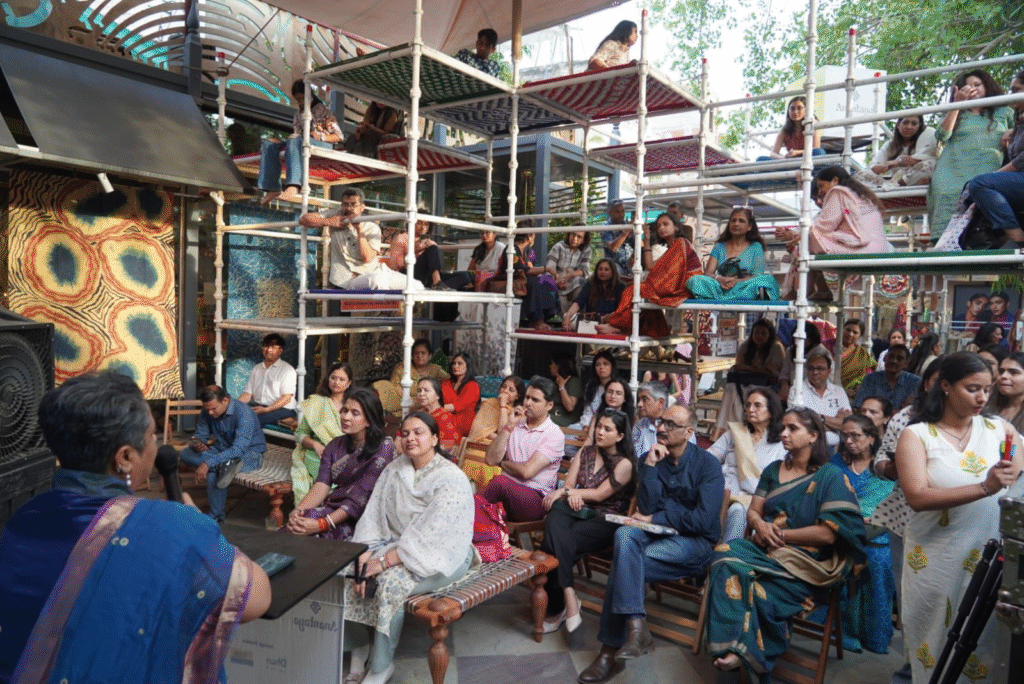
Maahi Roj 2026 curated a diverse range of sessions that explored sustainability, behaviour, and urban systems. Case Study Capsules by Amanpreet (Prakrit Foundation), Ar. Saran Bhatia, and Nivedan Rathi (AI expert) presented grounded approaches to collective systems and the evolving role of technology in shaping cities.
The Civic Kumbh, moderated by Ajaita Shah, brought together Aditya Nath, Dhawal Singhal, Archana Sharma, Rohit Agarwal, and Ashutosh Nandwana, fostering a dialogue on civic participation and behavioural change.
A presentation by Dhun, led by Ar. Manisha Sharma, added further perspectives on community-driven practices.
The sessions also included the Maahi Roj Civic Warriors Awards, recognising selected initiatives by ADI Jaipur, led by Meenakshi Singh and her team.
Workshops: Participation in Practice
The festival extended beyond dialogue into hands-on engagement. Prayer Wheels for the Earth, led by Shalini Dutt, continued as a participatory weaving installation using waste—where individual contributions came together into a shared collective form.
Traces of Us: A Live Cyanotype Act by Kiranjeet Kaur (AKFD) offered a live artistic experience, while a DIY composting demonstration by Amanpreet (Prakrit Foundation) provided practical tools for sustainable living.
Art, Craft, and Living Traditions
Art installations and exhibitions formed a significant part of the experience. Navoham: Heritage to Contemporary, led by Sangeeta Singh of the Creative Experts Community, explored the relationship between craft and conduct. Participating artists included Arzoo and Yunus.
Artist’s Expression: Beyond the Block by Yunus Khimani brought together traditional craft and contemporary practice, examining material, technique, and artistic interpretation.
A key highlight was The Charpai Project, curated by Ayush Kasliwal and co-curated by Ramyudh Sahu with the Serendipity Arts Foundation. Making its Jaipur debut, the project reimagined the charpai as a living system shaped by craft, climate, and community—bridging traditional knowledge with contemporary design.
HUMM Market: Conscious and Collective
The HUMM Market brought together conscious pop-ups and collective initiatives. Highlights included the Swap Shop by Devika Kasliwal and Yohan Malvai, encouraging exchange and circular practices; recycled woven paper products by Sutrakar (Neerja); crochet torans by Rubhu; handblock garments by Craft Women Producer Company Limited; hand-embroidered artworks and accessories by Shrujan, Bhuj; and innovative startup ideas supported by I-Start Rajasthan.
Collaborative Ecosystem
Maahi Roj 2026 was supported by a wide network of partners, including Dhun as Strategic Partner, Kogta Foundation as Associate Partner, ADI Jaipur as Knowledge Partner, Department of Information Technology Rajasthan (DOITR), WICCI Architecture Rajasthan, Arya Niwas, I-Start Rajasthan, Serendipity Arts Foundation, EBNW, Neewara Academy, and TOSS—reflecting a collaborative ecosystem committed to civic and cultural engagement.
A Shared Way Forward
More than a festival, Maahi Roj 2026 became a space for collective reflection and action. It brought together civic and government stakeholders, urban designers, architects, behavioural thinkers, social designers, grassroots actors, and the creative community to rethink Jaipur’s future.
In a city where heritage and modern pressures increasingly intersect, Maahi Roj’s message is both timely and urgent: cities are not just inherited—they are co-created. And in the spirit of HUMM, it is through shared awareness and collective responsibility that more sustainable, inclusive, and meaningful urban futures can emerge.