

In a landmark step towards preserving India’s ancient cultural legacy, the foundation stone of the country’s first Petroglyph Conservation Park was laid in Ladakh on April 19, 2026, marking World Heritage Day. The project was inaugurated by Lieutenant Governor Vinai Kumar Saxena along the banks of the Indus River.
The initiative aims to safeguard Ladakh’s centuries-old rock carvings, which face increasing threats from tourism pressure, infrastructure expansion, and environmental degradation.
What Are Petroglyphs?
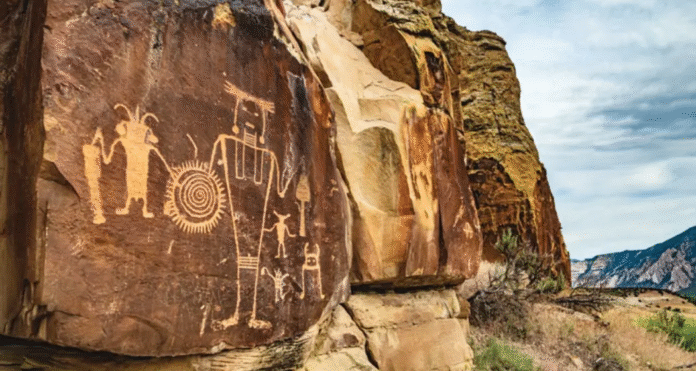
Petroglyphs are prehistoric images, symbols, and carvings engraved directly onto rock surfaces by early human communities. Unlike painted rock art, these carvings provide enduring archaeological evidence of ancient life.
In Ladakh, these petroglyphs depict hunting scenes, animals such as ibex and snow leopards, and later elements of Buddhist culture—including stupas and inscriptions—offering a visual timeline of cultural evolution over centuries.
Why This Conservation Park Matters
Officials estimate that nearly 400 petroglyph sites are spread across Ladakh, found both in clusters and isolated locations. While clustered sites are relatively easier to protect, isolated carvings—especially along the Indus River and Zanskar River—are highly vulnerable to:
- Road construction and blasting
- Environmental damage
- Lack of awareness and monitoring
The upcoming conservation park will relocate endangered carvings from such vulnerable zones and preserve them in a secure, curated environment, ensuring both protection and public access for education and research.
ASI Partnership for Scientific Preservation
A Memorandum of Understanding has been signed between the Department of Archives, Archaeology and Museums and the Archaeological Survey of India (ASI) to jointly conserve these invaluable heritage assets.
Many carvings feature inscriptions in Chinese, Arabic, Sanskrit, and other ancient languages, highlighting Ladakh’s historic role as a crossroads of trade and civilizations.
Key Facts
- Petroglyphs are carvings on rock surfaces (unlike pictographs, which are painted).
- Ladakh hosts one of the largest collections of prehistoric rock art in South and Central Asia.
- Major sites include Domkhar, Alchi, Chilling, Dah Hanu, and Tangtse.
- World Heritage Day is observed annually on April 18.
Boost to Heritage Tourism and Community Role
Calling petroglyphs “open-air museums,” the Lieutenant Governor emphasized the development of heritage tourism circuits—such as petroglyph and Buddhist circuits—to promote responsible tourism.
He stressed that conservation must go hand in hand with development and should be treated as a collective responsibility. Local communities, monks, youth, and other stakeholders have been urged to act as custodians of this shared heritage.
The Petroglyph Conservation Park is expected to emerge as a model for balancing tourism, development, and cultural preservation in the ecologically sensitive Himalayan region.