

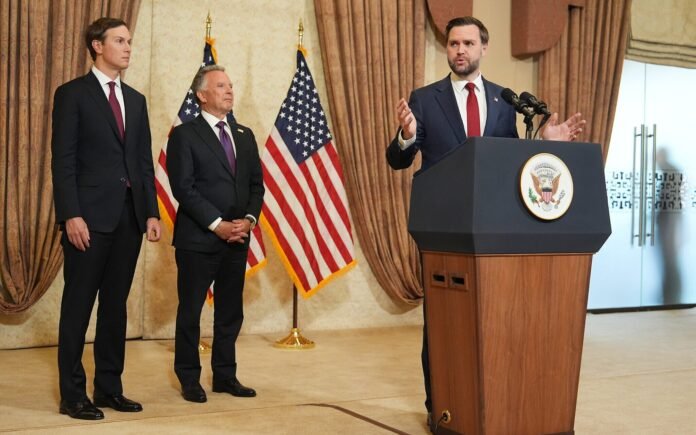
High-stakes peace talks between the United States and Iran ended without an agreement after marathon negotiations in Islamabad, raising fears of renewed conflict in West Asia and wider global repercussions. The talks, held on April 11–12, 2026, were the first direct high-level engagement between the two nations in decades and were aimed at stabilizing a fragile ceasefire following weeks of intense fighting.
What Happened in Islamabad?
The negotiations—often referred to as the Islamabad Talks—lasted nearly 21 hours and were mediated by Pakistan. The U.S. delegation was led by Vice President JD Vance, while Iran was represented by senior political leadership, including parliamentary speaker Mohammad Bagher Ghalibaf.
Despite the historic nature of the meeting, both sides failed to bridge deep differences. Vance confirmed that no agreement was reached, stating that the U.S. had participated in “good faith” but could not secure Iran’s acceptance of key conditions.
Why Did the Talks Fail?
The primary sticking point was Iran’s nuclear programme. The United States demanded firm guarantees that Iran would abandon ambitions to develop nuclear weapons, while Tehran refused to make such commitments, citing sovereignty and security concerns.
Other contentious issues included:
●Control and security of the strategically vital Strait of Hormuz
●Sanctions relief and release of frozen Iranian assets
●Regional security dynamics, including Israel and allied groups
Iran accused the U.S. of making “unrealistic demands,” while Washington blamed Tehran for refusing to compromise on critical security issues.
Context: A War and a Fragile Ceasefire
The talks came in the backdrop of a six-week conflict involving U.S. and allied strikes on Iran, which led to widespread destruction and loss of life across the region. A temporary ceasefire—brokered with Pakistan’s help—had raised hopes for a diplomatic breakthrough.
However, the failure of negotiations now puts that ceasefire at serious risk, with both sides hardening their positions.
Aftermath and Global Implications
Following the collapse of talks, tensions escalated rapidly. The U.S. signaled tougher measures, including a possible naval blockade targeting Iranian ports and oil routes, particularly around the Strait of Hormuz—a critical artery for global energy supplies.
This has already triggered volatility in global oil markets, with prices rising sharply amid fears of supply disruptions and wider conflict.
An Uncertain Road Ahead
While both sides have not completely shut the door on future dialogue, the immediate outlook remains tense. Analysts suggest that the breakdown highlights the deep mistrust and structural disagreements that continue to define U.S.–Iran relations.
The failure of the Islamabad talks underscores a stark reality: despite diplomatic efforts, achieving lasting peace in the region will require more than negotiations—it will demand significant political compromise, mutual trust, and sustained international mediation.