

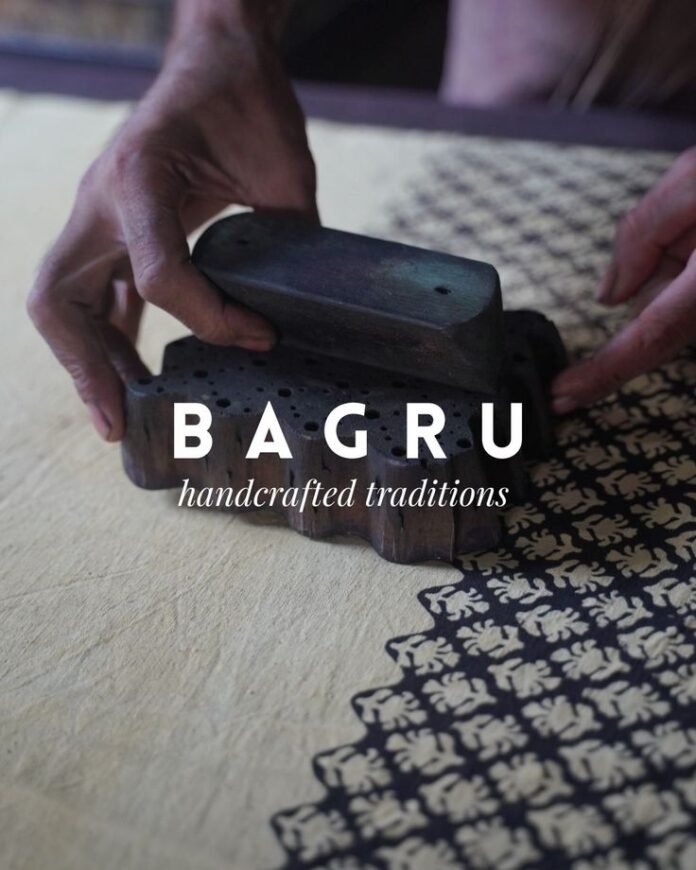
Bagru print is one of Rajasthan’s most distinctive textile traditions, celebrated for its earthy colours, bold motifs, and deep-rooted connection to nature. Originating from the village of Bagru, located near Jaipur, this craft reflects centuries of artisanal knowledge, cultural identity, and sustainable practices.
A Craft with Deep Historical Roots
The history of Bagru printing is closely associated with the Chhipa community, traditional printers who migrated to this region several hundred years ago. Drawn by the availability of water from the Sanjaria River and fertile soil rich in natural minerals, they established Bagru as a thriving centre of hand block printing. Over time, the craft evolved while retaining its signature aesthetic—simple yet striking designs in natural hues.
The Unique Process of Bagru Printing
What sets Bagru print apart is its entirely hand-crafted and eco-friendly process. The technique begins with preparing the fabric, usually cotton, which is washed thoroughly to remove impurities. It is then treated with natural substances like harda (myrobalan), which helps the fabric absorb dyes more effectively.
Artisans use hand-carved wooden blocks to print patterns onto the fabric. These blocks are dipped in natural dyes—traditionally derived from indigo for blue, madder root for red, and iron filings mixed with jaggery for black. Each colour is applied separately, requiring precision and patience.
After printing, the fabric is dried in the sun and often washed again to fix the colours. The entire process is time-intensive, but it ensures durability and a rich, organic finish that machine printing cannot replicate.
Motifs, Colours, and Identity
Bagru prints are known for their bold and symmetrical motifs, often inspired by nature. Common designs include floral patterns, leaves, geometric shapes, and traditional motifs like jaal (net patterns) and boota (small motifs).
Unlike the brighter tones of other Rajasthani prints, Bagru is characterised by its earthy palette—deep reds, indigo blues, blacks, and off-whites. These colours not only reflect the natural dyes used but also give Bagru textiles a rustic and timeless appeal.
Bagru Print in Contemporary Times
Today, Bagru print has found a place far beyond traditional attire. While it continues to be used in sarees, dupattas, and turbans, it is now also seen in modern fashion—kurtas, dresses, home furnishings, and even global designer collections.
With the growing demand for sustainable and handmade products, Bagru printing has gained renewed attention. Its reliance on natural dyes and low-impact processes aligns perfectly with eco-conscious fashion trends. Designers and artisans are collaborating to innovate while preserving the authenticity of the craft.
A Living Tradition
Bagru print is more than a textile—it is a story of heritage, community, and harmony with nature. Each piece carries the imprint of the artisan’s hand and the legacy of generations.
In a world increasingly dominated by fast fashion, Bagru stands as a reminder of slow, mindful creation—where tradition, sustainability, and artistry come together in every block-printed detail.