

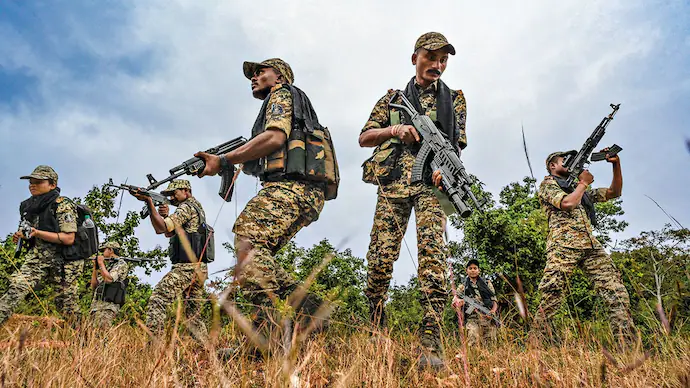
Under the decisive leadership of PM Narendra Modi, India has achieved what once seemed impossible. The ‘Red Corridor’ has collapsed, once affecting 12 crore people across 12 states. The highly affected districts have been reduced from 126 (2014) to just 2 now and 4,839 cadres brought into the mainstream; top commanders were neutralised.
This is New India, resolute, relentless, and moving towards a terror-free future.
The Union Ministry of Home Affairs has officially declared India “Naxal-free” following the March 31, 2026, deadline, marking a major internal security victory. Left-Wing Extremism (LWE)-affected districts plummeted from 126 in 2014 to just 7 in 2026, with only 3 considered “most affected” (Bijapur, Sukma, Narayanpur). Violence declined by 88% since 2010.
𝐓𝐡𝐞 𝐭𝐢𝐝𝐞 𝐡𝐚𝐬 𝐭𝐮𝐫𝐧𝐞𝐝 𝐢𝐧 𝐍𝐚𝐱𝐚𝐥-𝐚𝐟𝐟𝐞𝐜𝐭𝐞𝐝 𝐫𝐞𝐠𝐢𝐨𝐧𝐬.
India’s relentless fight against Naxalism has yielded results, making India Naxal-free. Through the “Zero Tolerance” policy and a focus on grassroots development, the government is reclaiming regions that were once inaccessible. There has been a total of 90% reduction in Naxal-affected districts since 2014, a total of 70% decrease in civilian casualties, ensuring safer communities. A total of 12,000 km of roads has been constructed to bring essential services to the most remote areas. Around 586 fortified police stations now stand as bastions of security and governance.
𝐌𝐨𝐝𝐢 𝐠𝐨𝐯𝐞𝐫𝐧𝐦𝐞𝐧𝐭 𝐢𝐬 𝐛𝐮𝐢𝐥𝐝𝐢𝐧𝐠 𝐚 𝐬𝐭𝐫𝐨𝐧𝐠𝐞𝐫, 𝐦𝐨𝐫𝐞 𝐢𝐧𝐜𝐥𝐮𝐬𝐢𝐯𝐞 𝐈𝐧𝐝𝐢𝐚.
The transition to a “Naxal-free” India by March 2026 was achieved through a multi-pronged approach that integrated aggressive security operations with large-scale development and a compassionate rehabilitation policy.
This strategy, often referred to as the SAMADHAN doctrine, shifted the government’s stance from reactive containment to proactive elimination.
- Operational & Security Processes
The government re-established territorial supremacy by filling “security vacuums” in previously inaccessible areas.
SAMADHAN Doctrine (2017):
A comprehensive blueprint focusing on Smart leadership, Aggressive strategy, Motivation/training, Actionable intelligence, Dashboard-based tracking, Harnessing technology, Action plans for each theatre, and No access to financing.
Operation Kagar (2024–2025):
Also known as the “Final Mission,” this major offensive deployed nearly 1 lakh personnel to dismantle core Maoist strongholds in the Abujhmad forest and the Chhattisgarh-Telangana border.
Forward Operating Bases (FOBs):
Over 336 new camps were established deep in “Red Zones,” functioning as both security hubs and launch points for development.
Fortified Police Stations:
The number of these highly protected stations was increased from 66 in 2014 to over 612 by 2026 to ensure a permanent state presence.
- Developmental Processes
Infrastructure Push, digital & financial connectivity, socio- economic schemes like Dharti Aaba janjatiya gram Utkarsh and other policies like Surrender-cum-Rehabilitation Policy worked miracles as cadres were incentivised to defect with immediate cash grants (up to ₹5 lakh for high-ranking members), a monthly stipend for 36 months, and vocational training.
Challenging “Urban Naxal” Networks:
Targeted legal action against urban support systems, legal aid networks, and media narratives that provided ideological cover for the insurgency. This is not just a policy shift — 𝐓𝐡𝐢𝐬 𝐢𝐬 𝐍𝐞𝐰 𝐈𝐧𝐝𝐢𝐚 𝐝𝐞𝐥𝐢𝐯𝐞𝐫𝐢𝐧𝐠 𝐨𝐧 𝐬𝐞𝐜𝐮𝐫𝐢𝐭𝐲, 𝐬𝐭𝐚𝐛𝐢𝐥𝐢𝐭𝐲, 𝐚𝐧𝐝 𝐣𝐮𝐬𝐭𝐢𝐜𝐞.
By Vanshika Soni

The writer is student of Kanoria P G Mahila Mahavidyalaya