

A potential escalation in tensions involving the US, Israel, and Iran around the Strait of Hormuz is raising concerns not only about global energy supplies but also about a possible disruption to the world’s internet infrastructure.
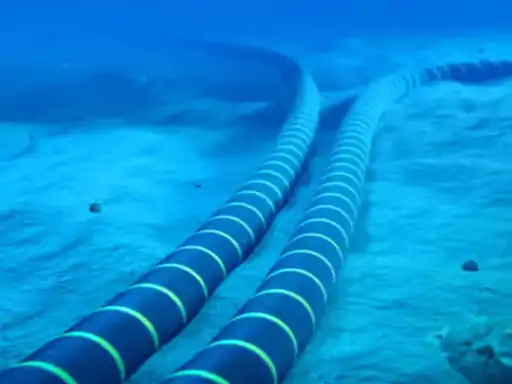
The Strait of Hormuz—through which nearly 20% of global crude oil and 25% of liquefied natural gas (LNG) passes—is also a critical route for undersea internet cables. Any damage to this infrastructure could impact internet connectivity worldwide, including in India.
97% of Global Data Travels Under the Sea
Contrary to popular belief, the internet does not primarily rely on satellites. Nearly 95% to 97% of global data traffic is transmitted through fiber-optic cables laid along the ocean floor.
Key international cable systems such as SEA-ME-WE, AAE-1, and EIG pass close to the Strait of Hormuz, connecting India with Europe, Africa, and West Asia.
Why This Is a Major Concern for India
India’s digital ecosystem is heavily dependent on these undersea cable routes, most of which pass through the Arabian Sea and the Gulf region.
If these cables are damaged:
- Higher Latency: Data may be rerouted through longer paths, such as the Pacific route, increasing transmission delays.
- Slower Internet Speeds: Users may experience buffering on platforms like YouTube, Instagram, and Netflix, along with disruptions in video calls and cloud services.
- Economic Impact: India’s $250 billion (₹23.48 lakh crore) IT and outsourcing sector depends on fast, real-time connectivity with global clients. Any slowdown could lead to service disruptions, SLA breaches, and financial penalties.
- Financial Systems at Risk: Remittances from Gulf countries and global banking systems like SWIFT may also experience delays.
Will the Internet Completely Shut Down?
A complete global internet blackout is unlikely. The internet is designed with redundancy, meaning data can be rerouted through alternate paths if one route fails.
However, this rerouting increases congestion, which can significantly reduce speeds. High-sensitivity sectors such as stock markets and high-frequency trading could face serious risks, where even milliseconds matter.
India Exploring Alternative Solutions
To reduce dependence on vulnerable routes, India and other countries are investing in alternative infrastructure:
- New undersea cable routes that bypass geopolitically sensitive regions
- Satellite-based internet services such as Starlink as backup connectivity
A Growing Digital Chokepoint
Experts increasingly view the Strait of Hormuz not just as an energy chokepoint, but as a critical digital chokepoint. As geopolitical tensions rise, the risks to global internet stability are becoming as significant as those to global oil supply.