

From monastery rituals to the modern stage, a classical tradition rooted in faith and storytelling
Among India’s diverse classical dance traditions, Sattriya holds a unique place—where art becomes devotion and performance becomes prayer. Originating in the northeastern state of Assam, Sattriya is deeply intertwined with spirituality, evolving within monastic institutions before emerging onto the global cultural stage.
Origins in Faith: The Legacy of Sankardev
Sattriya traces its origins to the 15th century and the teachings of Srimanta Sankardev, the saint-scholar who founded the Ekasarana Dharma—a neo-Vaishnavite movement centered on devotion to Lord Krishna. He introduced Sattriya as a medium to communicate religious teachings, moral values, and philosophical ideas to the masses.
Performed in Sattras (Vaishnavite monasteries), the dance was initially an integral part of ritual worship. It was traditionally performed by male monks, known as bhokots, as a form of devotional service.
From Sacred Spaces to Classical Recognition
Over time, Sattriya moved beyond monastery walls and embraced the proscenium stage, allowing both men and women to perform. Its evolution from a ritual practice to a performing art form led to its formal recognition in 2000 by the Sangeet Natak Akademi as one of India’s eight classical dances.
This recognition brought national and global attention to a tradition that had quietly flourished in Assam for centuries.
Technique, Form, and Expression
Sattriya is a complete dance form, harmoniously blending:
●Nritta (pure dance)
●Nritya (expressive storytelling)
●Natya (dramatic representation)
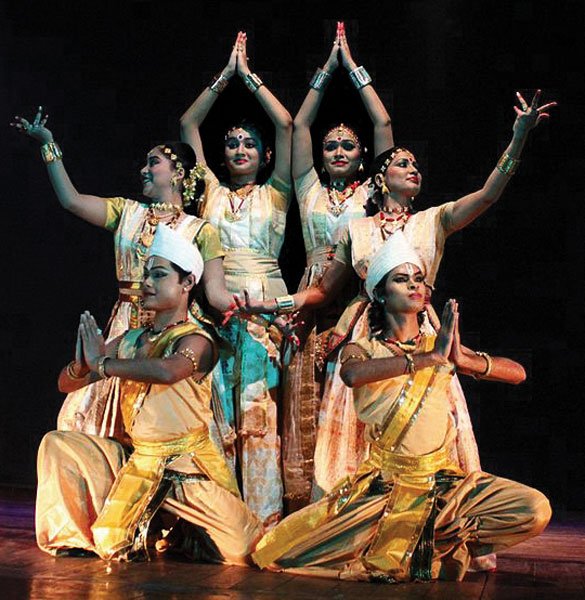
It is characterized by precise hand gestures (mudras), rhythmic footwork, and expressive facial movements. Two distinct stylistic streams define its technique:
●Purush Pak (vigorous, masculine style)
●Prakriti Pak (graceful, feminine style)
The themes are predominantly drawn from Krishna-centric texts, especially the Bhagavata Purana, portraying episodes from the life of Lord Krishna and other Vaishnavite narratives.
Music, Costume, and Aesthetic Appeal
The dance is accompanied by devotional compositions known as Borgeet, also attributed to Sankardev. Traditional instruments such as the khol (drum), cymbals, and flute create a rhythmic and spiritual ambiance.
Costumes reflect Assam’s rich textile heritage, featuring paat, muga, and endi silk, adorned with traditional jewellery. The visual elegance of Sattriya lies in its balance of vibrant attire, fluid movements, and disciplined technique.
Spiritual Essence and Contemporary Relevance
What distinguishes Sattriya is its enduring spiritual core. Even as it has adapted to contemporary stages, it retains its devotional essence—serving as a bridge between ritual and performance, faith and art.
A Living Tradition
Today, Sattriya continues to evolve while preserving its sacred roots. From monastery courtyards to international festivals, it stands as a testament to Assam’s cultural richness and India’s artistic diversity.
More than just a dance, Sattriya is a living tradition—where every gesture tells a story, and every movement echoes centuries of devotion.