

An Introduction to Blue Pottery
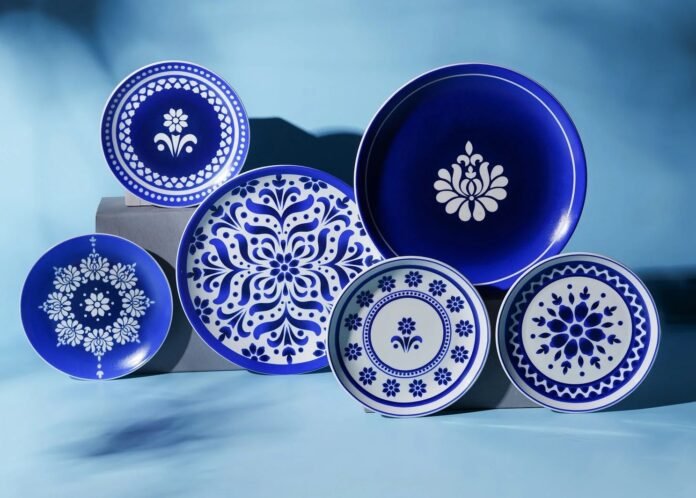
Blue Pottery is one of Rajasthan’s most distinctive and visually striking handicrafts, celebrated for its luminous blue designs set against a pristine white base. Despite being called “pottery,” it is not made from clay, which sets it apart from conventional ceramic traditions. Instead, it belongs to a unique category of quartz-based ceramic art, known for its smooth texture and delicate finish.
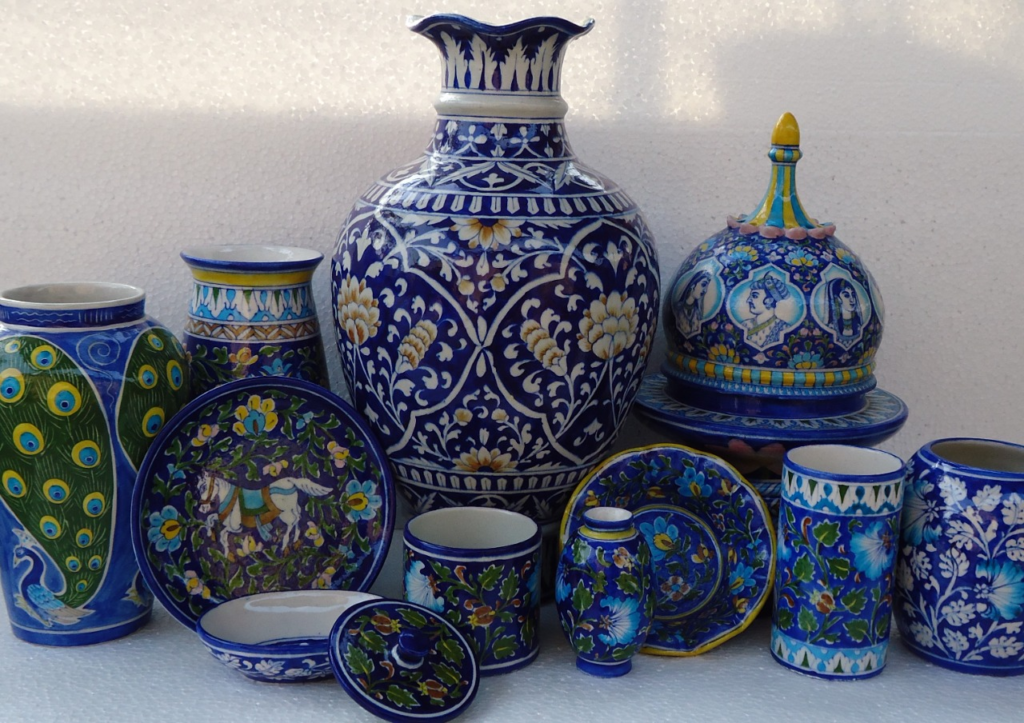
Characterised by intricate hand-painted motifs—ranging from flowers and birds to geometric and arabesque patterns—Blue Pottery reflects a refined aesthetic that is both traditional and timeless. The dominant hues of cobalt blue and turquoise, often accented with green, yellow, or brown, lend it an unmistakable identity.
Tracing Its Origins: From Persia to Jaipur
The origins of Blue Pottery can be traced back to Persia (modern-day Iran), from where the technique travelled across Central Asia to India. It was introduced during the Mughal era, when artistic exchanges brought Persian designs and glazing techniques into the subcontinent, further enriched by influences from Chinese ceramic traditions.
In India, the craft found a nurturing ground in Jaipur, where it flourished under royal patronage. Over time, however, the tradition declined and nearly faded into obscurity by the early 20th century.
The revival of Blue Pottery is largely credited to the visionary artist Kripal Singh Shekhawa, who, along with cultural patrons, reintroduced and refined the craft, ensuring its survival and global recognition.
Centres of Craftsmanship in Rajasthan
Blue Pottery is most prominently practiced in and around:
●Jaipur – the principal hub and cultural heart of the craft
●Sanganer – known for artisan workshops and production units
●Smaller clusters such as Neota and nearby villages
These regions host skilled artisan communities who continue to preserve and innovate within this traditional art form.
Materials: The Science Behind the Beauty
What makes Blue Pottery truly unique is its composition. Instead of clay, a special dough is prepared using:
●Finely ground quartz stone powder
●Powdered glass
●Multani Mitti (Fuller’s Earth)
●Borax and other binding agents
●Natural gum (katira gond) and water
The colours are derived from natural mineral oxides:
●Cobalt oxide for the signature blue
●Copper oxide for green
This combination results in a surface that is smooth, low in porosity, and visually refined, though relatively delicate compared to traditional clay pottery.
The Crafting Process: From Dough to Design
The creation of Blue Pottery is a meticulous, multi-stage process requiring both technical skill and artistic precision:
1. Preparation of the Dough
Raw materials are blended into a soft, pliable dough.
2. Moulding
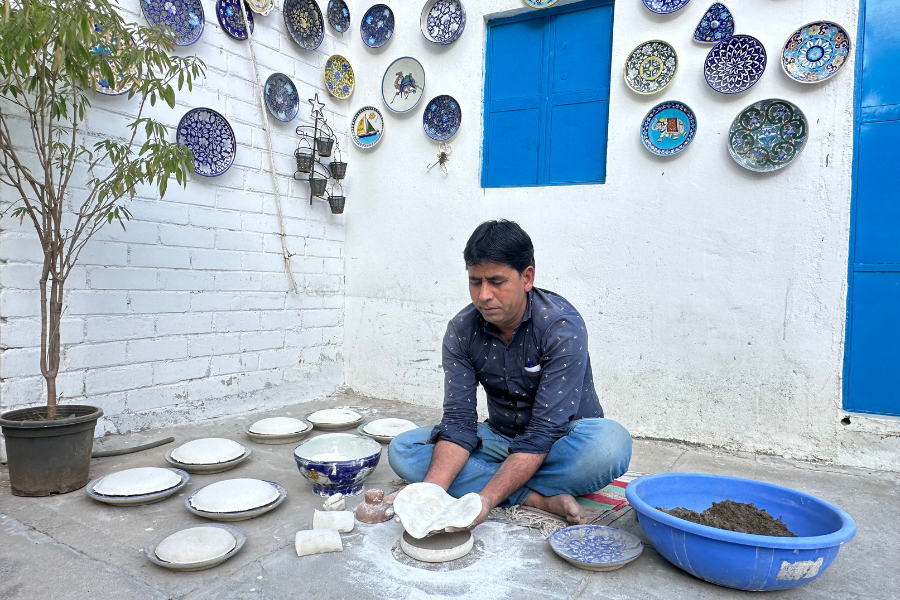
The dough is pressed into Plaster of Paris (POP) moulds to achieve the desired shapes.
3. Drying and Smoothing
The formed pieces are dried and carefully finished to remove imperfections.
4. Designing and Painting
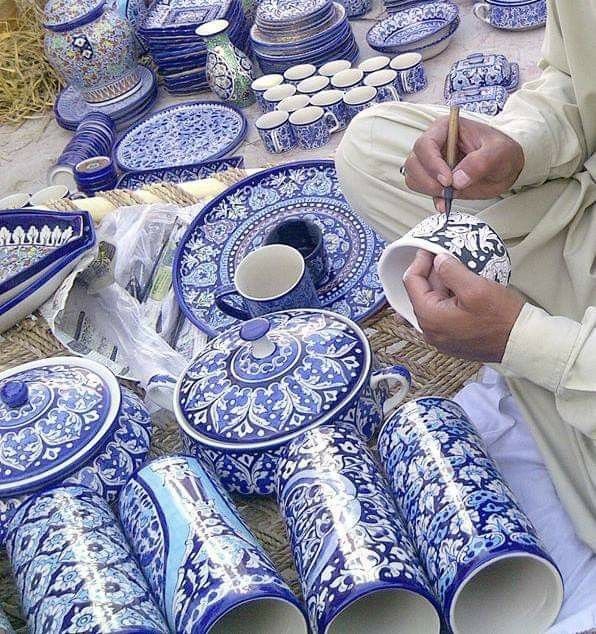
Artisans sketch patterns and hand-paint them using oxide-based pigments.
5. Glazing
A transparent glaze is applied, giving the piece its characteristic shine.
6. Firing
The pieces are fired in kilns at relatively low temperatures, typically around 800–850°C, which helps set the glaze and colours.
Products and Their Uses
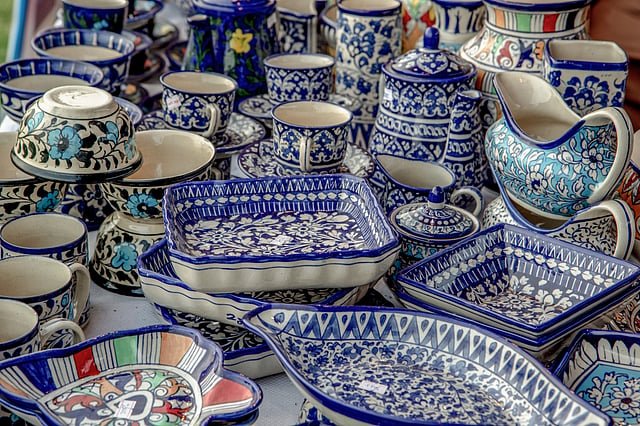
Blue Pottery finds expression in a wide variety of products, including:
●Decorative plates, bowls, and vases
●Tiles used in architecture and interior décor
●Tea sets, cups, and utility items
●Coasters, trays, soap dishes, and door knobs
While traditionally ornamental, many contemporary items are now designed for functional use, with several artisans adopting lead-free glazing techniques to enhance safety.
The Artisans: Keepers of a Living Tradition
At the heart of Blue Pottery lies the dedication of its artisans—skilled craftspeople who often inherit their knowledge through generations. Working in small workshops, particularly around Jaipur, they combine traditional methods with evolving designs to meet modern tastes.
The revival and continued promotion of this craft have not only preserved cultural heritage but also created sustainable livelihoods for artisan communities.
Cultural Importance and Enduring Appeal
Blue Pottery stands as a remarkable example of cultural fusion—blending Persian elegance, Mughal sophistication, and Rajasthani creativity. Its significance lies in:
●Heritage Value: A centuries-old tradition rooted in cross-cultural exchange
●Artistic Excellence: Intricate hand-painted craftsmanship
●Economic Role: Supporting local artisans and craft industries
●Global Recognition: Widely admired and exported across the world
Conclusion
Blue Pottery is more than a decorative art—it is a narrative of history, resilience, and artistic brilliance. From its journey across continents to its revival in the workshops of Jaipur, it continues to enchant with its serene blues and intricate designs.
In every piece lies not just beauty, but a legacy—one that reflects the enduring spirit of Rajasthan’s artisans and the timeless charm of handcrafted art.