

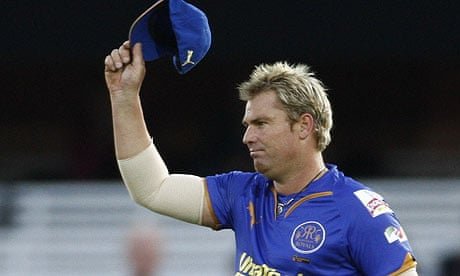
In the ever-evolving world of cricket, where player auctions and match-winning performances often dominate headlines, some stories quietly unfold over years—gaining meaning with time. The journey of Shane Warne and his association with Rajasthan Royals is one such story. It is not merely about cricketing brilliance, but about foresight, belief, and a decision that would eventually turn into one of the most remarkable financial outcomes in the history of the sport.
When the Indian Premier League began in 2008, it was still an untested concept. Franchises were newly formed, the format was experimental, and the future of the league—though promising—was uncertain. Amid this backdrop, Shane Warne signed on with Rajasthan Royals. But his role extended far beyond that of a player. He became the captain, mentor, and the strategic force behind a team that lacked the star power of its rivals.
What made Warne’s contract particularly unique was a clause that, at the time, did not attract much attention. Alongside his playing salary, he negotiated a 0.75% ownership stake in the franchise for each year he played. In today’s context, such deals are seen as forward-thinking, but in 2008, this was an unusual move. The IPL had not yet proven its long-term value, and equity in a cricket team did not carry the weight it does today. Yet, Warne saw something others perhaps did not—a future where the league could grow into a global sporting powerhouse.
That very year, Warne delivered on the field in spectacular fashion. Leading a relatively unknown squad, he guided Rajasthan Royals to victory in the inaugural IPL season. It remains one of the greatest underdog triumphs in cricket history. More importantly, it laid the foundation for the franchise’s identity—one built on instinct, strategy, and belief rather than big budgets.
Over the next few years, Warne continued with the Royals, eventually accumulating a 3% ownership stake in the franchise. At the time, the financial value of this stake, while respectable, was not extraordinary. The Royals had been originally bought for around $67 million in 2008, and even as their valuation grew over the next decade, the real explosion in value was yet to come.
That transformation arrived in 2026. In a landmark development for the IPL, Rajasthan Royals were acquired by a US-based consortium for approximately $1.63 billion, making them the most valuable franchise in the league’s history. Almost overnight, the meaning of Warne’s earlier decision changed dramatically. His 3% stake, once a small contractual addition, was now worth nearly ₹450–460 crore.
It is here that the story takes on a deeply emotional dimension. Shane Warne passed away in 2022, four years before this historic valuation was realised. He did not witness the full scale of what his decision had become. Yet, his foresight ensured that his family would benefit from it in a significant way. What he once saw as a long-term opportunity ultimately turned into a legacy—one that extended far beyond his achievements on the cricket field.
This story resonates because it reflects a rare quality in sport: the ability to think beyond the present. At a time when most players were focused on match fees and endorsements, Warne chose to invest in the future of the league itself. He believed in the IPL when it was still finding its feet, and in doing so, he positioned himself not just as a player, but as a stakeholder in its success.
Today, Shane Warne is remembered as one of the greatest cricketers the game has ever seen—a magician with the ball, a leader who inspired belief, and a personality who changed the game. But this chapter of his life reveals something equally compelling: a man who understood value, timing, and opportunity in a way few others did.
His 0.75% decision was small in appearance, but monumental in impact. It stands as a powerful reminder that sometimes, the most significant victories are not the ones celebrated in stadiums, but the ones that unfold quietly over time—shaped by vision, patience, and belief in what lies ahead.