

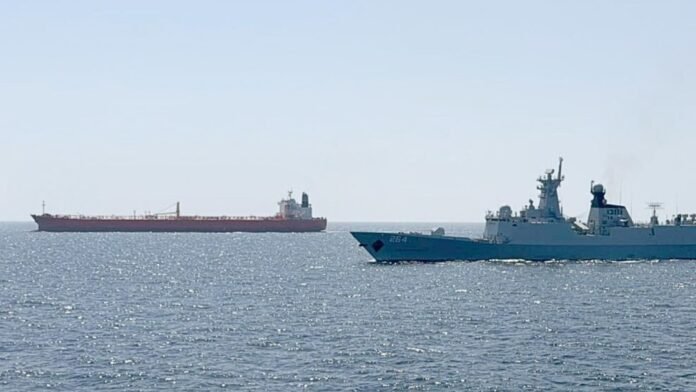
In a significant development amid rising tensions in West Asia, Iran has permitted two India-bound LPG carriers to pass through the strategically crucial Strait of Hormuz, offering relief to India’s energy supply concerns. The decision came at a time when maritime traffic in the region has been heavily restricted due to ongoing geopolitical tensions and military conflict.
According to reports, the two Indian-flagged vessels were allowed to transit the narrow waterway after diplomatic engagement between India and Iran. The move ensured that the ships carrying liquefied petroleum gas (LPG) could safely continue their journey towards Indian ports despite heightened security risks in the region.
How Much LPG Is on Board?
The two ships together are believed to be carrying LPG equivalent to around 60 lakh domestic cooking gas cylinders, making the cargo highly significant for India’s household energy needs.
Liquefied petroleum gas is one of India’s most widely used cooking fuels, and a substantial portion of the country’s LPG supply is imported from the Middle East. Even a small disruption in tanker movement through Hormuz can therefore affect supply chains and price stability.
Why the Strait of Hormuz Is So Critical
The Strait of Hormuz, located between Iran and Oman, is one of the world’s most important maritime chokepoints. Roughly one-fifth of global oil consumption passes through this narrow sea route every day, along with large volumes of liquefied natural gas. Because of this, any tension or disruption in the strait can quickly affect global energy markets and shipping routes.
What It Means for India
For India, the safe passage of these LPG carriers highlights two important factors:
1. Energy security: Ensuring uninterrupted supplies of cooking gas for millions of households.
2. Diplomatic balancing: Maintaining strong relations with key West Asian partners even during regional conflicts.
In a volatile geopolitical environment, the movement of just two ships may seem small—but in the global energy trade, even a single tanker passing safely through Hormuz can carry enormous economic and strategic importance.