

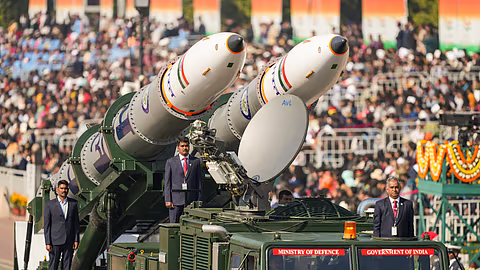
India continues to be the world’s second-largest arms importer despite a marginal decline in defence imports in recent years, according to a new report released by the Stockholm International Peace Research Institute (SIPRI). The report highlights shifting patterns in India’s defence procurement as the country gradually diversifies suppliers and pushes for greater self-reliance in military production. While imports declined by around 4 per cent between 2016–20 and 2021–25, India still remains heavily dependent on foreign suppliers for key defence platforms and technologies.
Decline in Arms Imports Amid Self-Reliance Push
The SIPRI report notes that India’s arms imports saw a modest decline between the two reporting periods. This reduction is largely attributed to the government’s efforts to strengthen domestic defence manufacturing through initiatives such as “Atmanirbhar Bharat” in the defence sector. Increased indigenous production of equipment, including missiles, artillery systems, and naval platforms, has slightly reduced dependence on foreign procurement. However, India continues to import advanced systems such as fighter aircraft, air defence systems, and specialised military technology.
Russia Remains Top Supplier but Share Shrinks
Russia continues to be India’s largest supplier of major arms, accounting for about 40 per cent of total imports during 2021–25. However, this represents a significant decline compared with earlier periods when Russia’s share stood at 51 per cent in 2016–20 and nearly 70 per cent during 2011–15. The fall indicates India’s growing diversification of defence purchases and its increasing engagement with Western defence manufacturers.
France and Israel Expand Role in Indian Defence Imports
France has emerged as the second-largest supplier of major arms to India, contributing about 24 per cent of imports, though this share has slightly declined from 29 per cent earlier. The defence partnership between the two countries is expected to strengthen further as India moves forward with plans to procure 114 additional Rafale fighter aircraft. Israel remains another key defence partner, maintaining a 15 per cent share of India’s arms imports, particularly in areas such as drones, missiles, and air defence technologies.
Important Facts
- Stockholm International Peace Research Institute (SIPRI) is a Sweden-based think tank tracking global arms transfers.
- India is the world’s second-largest arms importer according to SIPRI’s 2021–25 report.
- The United States accounts for the largest share of global arms exports at 42 per cent.
- Israel overtook the United Kingdom in global arms exports during the 2021–25 period.
Global Arms Trade Rises Amid Geopolitical Tensions
Globally, the volume of major arms transfers increased by about 9.2 per cent between 2016–20 and 2021–25. Rising geopolitical tensions and ongoing conflicts such as the Russia–Ukraine war have significantly driven demand for advanced military equipment. The United States remained the largest exporter of arms globally, accounting for 42 per cent of total international transfers and supplying weapons to nearly 99 countries. Europe emerged as the largest recipient region for American arms exports, reflecting growing security concerns across the continent.