

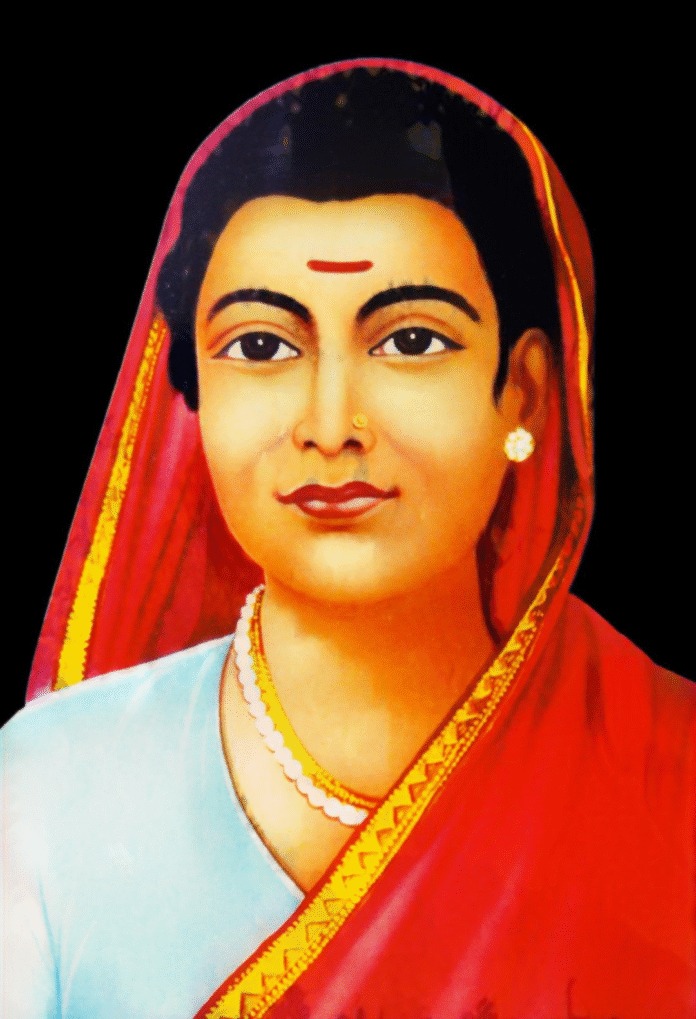
In nineteenth-century India, education was largely limited to upper-caste men. Girls were rarely allowed to attend school, and those from marginalised communities had almost no access to formal learning. Society believed that educating women would disrupt traditional family roles, and strict social customs discouraged women from stepping into public life.
In such a restrictive environment, Savitribai Phule emerged as one of the most courageous reformers in Indian history. Through education, poetry and social activism, she challenged both caste discrimination and gender inequality. Today she is widely remembered as India’s first female teacher and a pioneer who opened the doors of education for millions of girls.
Along with her husband Jyotirao Phule, Savitribai started a movement that reshaped India’s social and educational landscape.
The Journey From Child Bride to Teacher
Savitribai Phule was married at the age of nine, which was common in India during the nineteenth century. Recognising the power of education, Jyotirao Phule began teaching her to read and write at home. Savitribai later received formal teacher training in institutions in Ahmednagar and Pune, preparing herself for a professional career in teaching — something almost unheard of for women at that time.
Her transformation from a child bride to an educated teacher became a symbol of women’s empowerment in India.
Opening the First School for Girls
In 1848, Savitribai and Jyotirao Phule established one of India’s first modern schools for girls at Bhide Wada in Pune.
The school welcomed girls from all backgrounds, including those from socially marginalised communities. At a time when education was restricted by caste and gender, this step was revolutionary.
Encouraged by the success of their first school, the couple expanded their work. By 1851, they had established several schools in Pune for girls and children from marginalised communities. Their curriculum included subjects like mathematics, science and social studies, offering students a broad and modern education.
Facing Social Hostility
Savitribai Phule faced severe opposition from conservative sections of society. As she walked to school every day, people often threw stones, mud and cow dung at her in protest.
Despite the humiliation and harassment, she remained determined. According to many accounts, she carried an extra sari so she could change after reaching the classroom and continue teaching.
Her courage turned her into a powerful symbol of resistance against social injustice.
Champion of Social Equality
Savitribai and Jyotirao believed education was the key to breaking the rigid caste system. Their schools welcomed children from communities that had long been denied education, including the Mahar and Mang castes.
Savitribai was also deeply committed to women’s welfare. In 1863, the couple established Balhatya Pratibandhak Griha, a shelter for widows and pregnant women who faced social stigma. The centre provided care, protection and support, helping prevent female infanticide.
A Poet and Voice for Justice
Savitribai Phule was not only an educator but also a writer and poet. Her works, including Kavya Phule (1854) and Bavan Kashi Subodh Ratnakar (1892), addressed issues such as caste discrimination, women’s rights and the importance of education.
Through her poetry, she encouraged people to challenge injustice and seek knowledge.
Leadership in Social Reform
Savitribai played an important role in the Satyashodhak Samaj, an organisation founded by Jyotirao Phule to promote equality and oppose caste discrimination.
After her husband’s death in 1890, she continued leading the movement and remained active in social reform efforts.
A Life of Service Until the End
During the devastating plague outbreak in Pune in 1897, Savitribai dedicated herself to helping infected patients. She helped run a clinic and personally carried a sick child to receive treatment.
While serving the sick, she contracted the disease herself and passed away on March 10, 1897.
A Legacy That Still Inspires India
Savitribai Phule transformed the course of Indian education and social reform. By promoting girls’ education, challenging caste discrimination and supporting vulnerable women, she laid the foundation for a more equal society.
More than a century later, her courage and vision continue to inspire educators, activists and students across India.
Savitribai Phule’s life reminds us that education is not just a tool for knowledge, but a powerful force for social change.