

The names of India’s Union Territories carry fascinating stories rooted in history, language and mythology. Each name reflects cultural influences, ancient legends or geographical characteristics that shaped the identity of these regions over centuries.
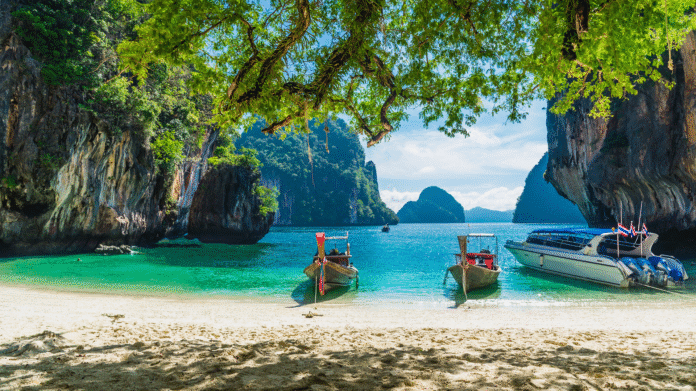
One of the most interesting examples is the Andaman and Nicobar Islands. Historians believe the word “Andaman” traces its origin to “Handuman” or “Hanuman,” the revered monkey god from the Indian epic Ramayana. Ancient travelers and Southeast Asian cultures often referred to the islands using variations of the name linked to Hanuman, suggesting strong mythological influence on the region’s identity.
Another Union Territory, Lakshadweep, literally means “one lakh islands” in Sanskrit. The name combines “Laksha” (one lakh or hundred thousand) and “Dweep” (island). Interestingly, despite the literal meaning, the archipelago consists of only about 36 islands. The poetic name is believed to symbolize abundance rather than an exact numerical count.
The name Puducherry has linguistic roots in Tamil culture. Derived from the Tamil words “Pudu” meaning “new” and “Cheri” meaning “settlement” or “village,” Puducherry essentially translates to “new settlement.” The name reflects the region’s history as a developing coastal town that later became a major colonial trading center under the French.
The northern Union Territory of Jammu and Kashmir also has deep historical associations. According to legend, “Jammu” is named after the ancient ruler Raja Jambu Lochan. Folklore suggests that the king founded the city after witnessing a lion and a goat drinking water peacefully at the same place, symbolizing harmony.
The word “Kashmir,” on the other hand, is linked to the ancient sage Kashyap. According to mythology, the region was once a vast lake that the sage drained to create habitable land, giving rise to the name “Kashyap-Mira,” which gradually evolved into Kashmir.
Further north lies Ladakh, a region known for its dramatic landscapes and high-altitude mountain passes. The name is believed to originate from Tibetan words meaning “land of high passes,” perfectly describing the rugged terrain that connects the Himalayas with Central Asia.
The national capital territory, Delhi, has multiple theories regarding the origin of its name. Some historians trace it to “Dhillika,” an ancient city believed to have been established by the Tomar rulers, while others suggest it came from the word “Dehleez,” meaning “threshold,” reflecting the city’s position as the gateway to northern India.
These names reveal how geography, mythology, language and historical events have shaped the identities of India’s Union Territories. Beyond administrative boundaries, they serve as reminders of the diverse cultural narratives that continue to define the nation’s heritage.