

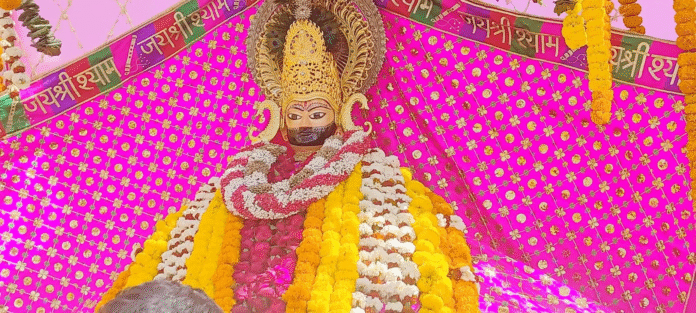
Under the soft hues of spring and the spiritual fervour of Falguni Ekadashi, the sacred town of Khatu prepares for one of its most cherished traditions — the grand Rath Yatra of Khatu Shyam.
For over 350 years, this centuries-old procession has carried Baba Shyam through the town amid chants, colours, music and unshakable devotion. This year, the spectacle promises to be even more resplendent, as the deity will ride in a magnificent chariot crafted from 125 kilograms of silver — a gleaming symbol of faith and gratitude offered by devotees.
A Living 350-Year-Old Tradition
Every year on Ekadashi during the Falgun month, Baba Shyam steps out of the temple sanctum to bless devotees across the town. The Rath Yatra, which will begin at 11:15 am from the temple premises, transforms the streets into a river of faith.
Devotees shower gulal into the air, dance to the rhythmic beats of the Chang, and sing bhajans as the chariot slowly advances. Chocolates and fruits are distributed from the Rath — a gesture lovingly described by locals as “Baba’s treasure being looted.” The enthusiasm to receive prasad and to pull the sacred chariot often reaches emotional heights, reflecting the deep personal bond devotees share with Lakhdatar.
Manvendra Singh Chauhan, Minister of the Shri Shyam Temple Committee, has appealed to devotees to maintain discipline and avoid pushing or jostling during the procession so that the spiritual atmosphere remains peaceful and safe for all.
Temple Timings Adjusted Due to Lunar Eclipse
This year’s celebrations come with important schedule changes. Due to a lunar eclipse on March 3, darshan at the temple will remain closed for the entire day.
Darshan will close again at 10 pm on March 4 in preparation for Baba’s Tilak ceremony and special Seva-Puja on March 5. Following the rituals, darshan will resume at 5 pm on March 5. The Tilak ceremony is considered one of the most sacred observances of the fair period.
A Chariot Worth Rs 1.5 Crore
Adding to the grandeur is the newly constructed chariot built last year in Nokha (Bikaner) at an estimated cost of ₹1.5 crore. Crafted over more than a month by eight artisans working daily, the grand Rath stands as a masterpiece of devotion and craftsmanship.
The identity of the donor who dedicated this opulent chariot to Baba Shyam has been kept confidential. Interestingly, to prevent the need for physically pushing the chariot amid massive crowds, it has been mounted on a jeep base for smooth movement through the packed streets.
Security on High Alert
With lakhs of devotees expected, authorities have made elaborate security arrangements. Multiple contingents of the Rajasthan Police will be deployed, supported by a Quick Response Team (QRT). The security personnel will closely monitor the procession to prevent overcrowding near the chariot and ensure a smooth and secure Rath Yatra.
Faith, Fervour and Festivity
The Rath Yatra is not merely a procession — it is a moving expression of collective devotion passed down through generations. From silver craftsmanship and sacred rituals to dancing devotees bathed in gulal, Falguni Ekadashi in Khatu is where faith takes to the streets.
As the silver chariot rolls forward and chants of “Shyam Baba ki Jai” echo through the town, history and devotion once again come alive in Rajasthan’s spiritual heartland