

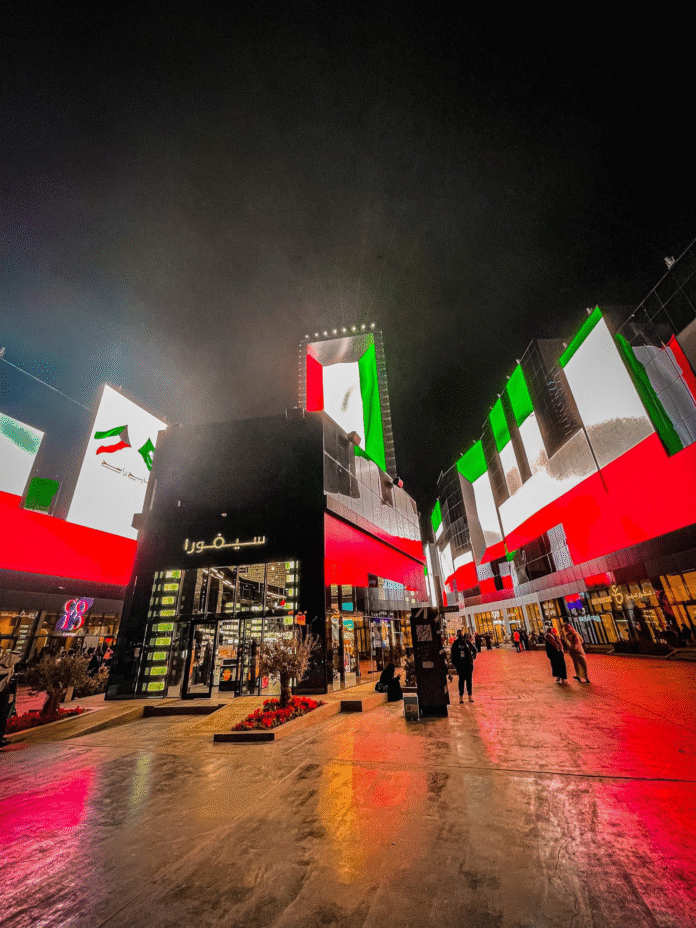
Kuwait National Day is celebrated every year on 25 February. This important national holiday commemorates the accession of Sheikh Abdullah Al-Salim Al-Sabah as the ruler of Kuwait in 1950. He is widely regarded as the founder of modern Kuwait due to his visionary leadership and historic reforms.
During his reign, Sheikh Abdullah Al-Salim Al-Sabah played a crucial role in securing Kuwait’s independence from British protection. In 1961, he signed a treaty that ended Kuwait’s status as a British protectorate, making the country a sovereign state. He also laid the foundation of Kuwait’s political system by establishing the Constitution of Kuwait in 1962 and creating the National Assembly (Parliament), making Kuwait one of the earliest constitutional monarchies in the Gulf region.
Origins of the National Day Celebration
Although Kuwait gained independence on June 19, 1961, the National Day was later shifted to February 25. The change was made due to the extreme summer heat in June. Since 1963, Kuwait has officially celebrated National Day on February 25 to honor Sheikh Abdullah Al-Salim Al-Sabah’s rise to power.
Historical Background of Kuwait
Kuwait began as a small fishing and trading settlement in the early 17th century. By the 18th century, it developed into a thriving port and shipbuilding center. The Al-Sabah family assumed power in 1756, and their leadership continues to this day.
Modern Kuwait and Its Global Significance
Officially known as the State of Kuwait, the country is located in Western Asia and shares borders with Iraq and Saudi Arabia, with a maritime border with Iran. Kuwait is home to some of the world’s largest oil reserves and has one of the strongest currencies globally, the Kuwaiti Dinar. Since independence, Kuwait has made significant progress in economic development, democracy, and social welfare.
National Day Celebrations
Kuwait National Day is celebrated with great pride and enthusiasm. Public holidays are declared, and cities are decorated with national flags and colorful lights. Fireworks displays, cultural events, parades, and concerts are organized across the country. Iconic landmarks such as Kuwait Towers, Kuwait National Museum, Mirror House, and Al Bahhar Village are illuminated. People gather with friends and family, decorate homes, and participate in public festivities that continue late into the night.