

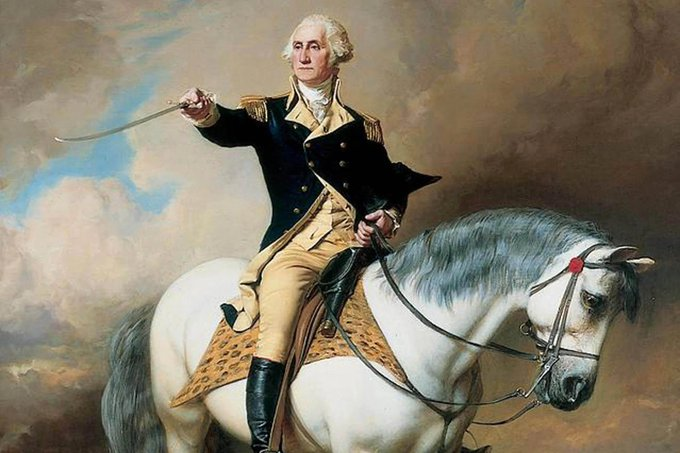
As the United States marks major milestones in its journey toward 250 years of independence, few landmarks capture the nation’s democratic spirit like the White House. Yet, one fascinating fact often surprises people: George Washington, America’s first president, never lived in the White House—despite being its chief visionary and driving force behind its creation.
In the United States, 22 February marks the birth anniversary of George Washington, the first President of the United States. While it is officially observed as part of Presidents’ Day on the third Monday in February, many still acknowledge the specific date.
This feature explores Washington’s crucial role in shaping the iconic presidential residence and how his democratic ideals influenced its design and legacy.
George Washington and the Birth of the American Presidency
When George Washington took office in 1789, the United States was an untested experiment in democracy. There was no precedent for a president, no established federal bureaucracy, and no symbolic center of power.
Washington spent his first term defining the role of the executive branch and building the foundations of the federal government. Among his priorities was creating a permanent residence for the nation’s leader—one that reflected republican values rather than royal grandeur.
A Democratic Vision, Not a Palace
Washington was deeply concerned about how the presidency would be perceived. He wanted to avoid any resemblance to European monarchies, where lavish palaces symbolised absolute power.
To achieve this, Washington rejected overly grand architectural proposals, including those by a French architect, and instead selected James Hoban, an Irish-born architect living in South Carolina. Hoban’s design was elegant yet restrained, reflecting the ideals of a democratic republic rather than a monarchy.
Choosing the Location and Supervising Construction
By 1792, the cornerstone of what would become the White House was laid in Washington, D.C.—a site personally chosen by George Washington. He took a hands-on approach to the project, overseeing aspects of carpentry, brickwork, and stone masonry.
Historians often compare his involvement to how he managed his Mount Vernon estate—methodical, detail-oriented, and deeply invested in the outcome.
Why Washington Never Lived in the White House
Construction of the White House took nearly eight years. By the time it was ready for occupancy, Washington had already completed his presidency. John Adams, the second president of the United States, became the first resident of the unfinished executive mansion in 1800.
Since then, every U.S. president has lived in the White House, making it one of the most enduring symbols of American leadership.
How the White House Evolved Over Time
The White House has undergone major transformations over the centuries:
- 1814: British forces burned the building during the War of 1812; it was later rebuilt.
- 1817–1829: The South and North Porticos were added under Presidents James Monroe and Andrew Jackson.
- 1901–1902: President Theodore Roosevelt officially named it the “White House” and built the West Wing.
- Early 1900s: President William Howard Taft introduced the first Oval Office.
Despite expansions and renovations, Washington’s original democratic vision remains central to its identity.