

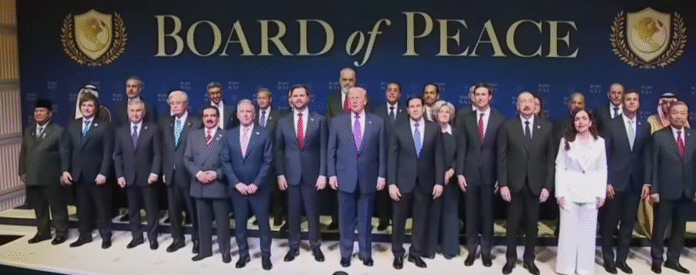
Former U.S. President Donald Trump’s ambitious new global initiative, the “Board of Peace,” held its first high-profile meeting this week in Washington, but the gathering was marked as much by notable absences as by its attendees.
While leaders from countries such as Hungary, Argentina, Turkey, Egypt, Pakistan, Armenia and the United Arab Emirates joined the summit, several of America’s closest allies chose to stay away, signaling deep skepticism about the project’s intent and structure.
Major Western Allies Decline to Join
Among the most prominent countries that skipped Trump’s peace initiative were:
- United Kingdom
- France
- Norway
- Sweden
- Slovenia
These nations reportedly declined participation over concerns that the Board of Peace could undermine the role of the United Nations in global conflict resolution. Some also criticized the board’s charter for failing to clearly address the Gaza conflict, despite the summit’s stated focus on the fragile ceasefire in the region.
The Vatican also turned down Trump’s invitation. Pope Leo XIV’s office expressed concern that crisis management should primarily remain under the authority of the United Nations, rather than a new parallel structure led by the United States.
European Union Keeps Distance
The European Union chose not to formally join the Board of Peace, although it sent European Commissioner Dubravka Šuica to attend the meeting as an observer. Italy also participated in a limited observer role, signaling cautious engagement rather than full endorsement.
Canada Excluded from the Board
In a surprising twist, Canada was not merely absent but excluded altogether. Trump withdrew Canada’s invitation last month after Canadian Prime Minister Mark Carney warned of a potential “rupture” in the global order during a speech at the World Economic Forum. The move highlighted growing diplomatic tensions between Washington and Ottawa.
Russia Uncertain, Not Present
Russia also skipped the first summit. Although invited, Moscow said it was still evaluating its long-term position. Russian Deputy Foreign Minister Sergey Ryabkov confirmed that Russia would not participate in the inaugural meeting, adding uncertainty over whether the Kremlin would eventually join the initiative.
Criticism Over Legitimacy and Representation
Human rights experts and critics have questioned the legitimacy of the Board of Peace, calling it a potentially “colonial” framework that risks sidelining existing international institutions. Others have raised concerns about the lack of Palestinian representation in the Gaza-related decision-making process.
Despite the criticism, Trump expressed optimism, calling the initiative “one of the most important things” he would be involved in and insisting it could bring peace “all over the world.”
A Divisive Start
The absence of key U.S. allies underscores the diplomatic challenges Trump’s Board of Peace faces. While some countries see it as a bold attempt to reshape global peace efforts, others fear it could fragment international cooperation and weaken established multilateral institutions.
As the world watches, the success or failure of Trump’s ambitious peace body may hinge on whether skeptical allies eventually choose to engage—or continue to stay away.