

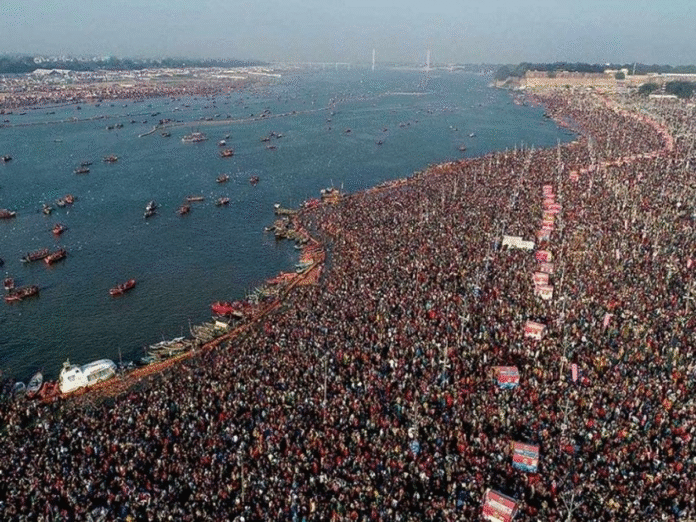
Mahamagha Mahotsavam 2026: Historic Revival on Bharathapuzha Banks Ends with Sacred Amrit Snan – A New Chapter in Southern Spirituality
On February 3, 2026, the Mahamagha Mahotsavam (also known as Mahamagh Mahotsav or Kerala’s Kumbh Mela) successfully concluded on the sacred banks of the Bharathapuzha (Nila River) in Thirunavaya, Malappuram district. This grand 17-19 day spiritual gathering, often hailed as South India’s first Kumbh-like festival, drew lakhs of devotees daily and marked the triumphant revival of a centuries-old tradition dormant for nearly 270 years.
The festival, organised under the leadership of Juna Akhada and spearheaded by Mahamandaleshwar Swami Anandavanam Bharati (also referred to as Anand Vaman Bharati), transformed the small town of Thirunavaya (population around 37,000) into a vibrant pilgrimage hub. With massive crowds-exceeding 3-4 lakh per day-participating in holy dips, rituals, and discourses, it symbolized the resurgence of Kerala’s ancient Hindu spiritual heritage.
Revival of 271 Year-Old Legacy: From Dormancy to Divine Gathering
Historically, the Mahamagha (or Maha Makham/Mamankam-linked) festival was a grand event held every 12 years, comparable in scale to North India’s Kumbh Mela. The last major observance is believed to have occurred around 1755, after which it faded due to historical disruptions like invasions (e.g., Hyder Ali) and British colonial concerns over large gatherings and law-and-order issues.Swami Anandavanam Bharati, Mahamandaleshwar of Juna Akhada, played a pivotal role in its revival, describing the tradition as 259 years old and re-establishing it in a full Kumbh-style format.Supported by spiritual figures like Mata Amritanandamayi and various sanyasi communities, the event aimed not just at rituals but at reconnecting the event aimed not just at rituals but at reconnecting Kerala with its deep-rooted cultural and dharmic identity.
According to legend, Lord Parashurama performed the first yajna here for global welfare, and during Magha month, the confluence of seven sacred rivers in the Bharathapuzha-known as Dakshina Ganga (Southern Ganga)-makes holy dips exceptionally auspicious, granting spiritual purification and moksha.
Key Highlights and Grand Finale
Duration: Rituals began as early as January 16 (with Pithru Bali), formal inauguration on January 19, and continued until February 3, 2026.
Inauguration: Kerala Governor Rajendra Vishwanath Arlekar hoisted the sacred Dharma Dhwaja at the Navamukunda Temple premises, symbolizing victory of dharma and unity.
Major Attractions: Daily Magha Snanam (holy baths from morning to evening), Nila Aarti, Vedic chants, Yati Puja, Upanishad discourses, Pithru Bali, and the spectacular Mahameru Rath Yatra in Peshwai style.
Climax on Final Day: The festival culminated
with the highly auspicious Maghamakam Amrit Snan (Amrita Snanam) at 8 AM on February 3 at the Aarti Ghat, coinciding with Makam Nakshatra and Dvitiya Tithi. This was followed by Yati Puja and evening Nila Aarti, leaving devotees in profound spiritual ecstasy.
The ancient Navamukunda Temple in Thirunavaya, also famous for the traditional Mamankam festival every 12 years, served as the epicenter, enhancing the site’s religious significance.
Bharathapuzha: Dakshina Ganga Becomes a Beacon of Faith
The 209-km-long sacred river, originating in Tamil Nadu and flowing through Kerala, witnessed an unprecedented surge of devotion. Devotees described the experience as akin to bathing in the Ganga at Prayagraj, with the riverbanks echoing with chants, bhajans, and collective prayers.
Swami Anandavanam Bharati emphasized that this was more than rituals-it was a movement to restore Kerala’s ancient spiritual roots. Organizers announced plans for even greater splendor in future editions, with a full-scale Prayagraj-style Maha Kumbh targeted for 2028.
A Triumph of Faith and Heritage
Despite some environmental and political discussions around the massive crowds and river impact, the 2026 Mahamagha Mahotsavam stands as a resounding success-a powerful affirmation of Sanatan Dharma’s enduring vitality in South India. It has not only revived a lost tradition but also ignited renewed interest in Kerala’s spiritual legacy, drawing pilgrims from across the country and beyond.