

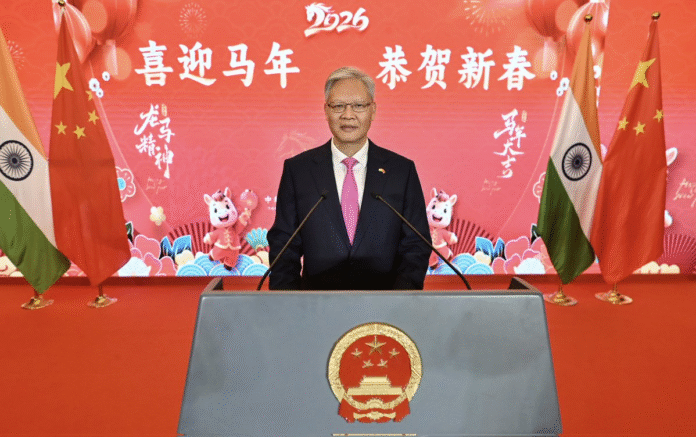
India–China economic relations have entered a renewed phase of engagement, with bilateral trade touching a historic high in 2025. The milestone reflects a gradual stabilisation of ties following years of diplomatic strain, alongside expanding commercial linkages between Asia’s two largest economies. Chinese officials have described the current trajectory as reaching a “new level of improvement”, signalling cautious optimism in bilateral relations despite ongoing strategic sensitivities.
| Aspect | Details |
|---|---|
| Overall Relationship Status | Renewed phase of engagement with cautious optimism |
| Total Bilateral Trade (2025) | USD 155.6 billion (highest ever recorded) |
| Year-on-Year Trade Growth | Over 12% increase |
| India’s Export Growth to China | 9.7% year-on-year |
| Trade Balance | Persistent trade imbalance in China’s favour |
| Major Indian Exports | Minerals, agricultural products, pharmaceuticals, chemicals |
| Diplomatic Milestone | PM Modi–President Xi Jinping meeting in Tianjin, August 2025 |
| Nature of Diplomatic Shift | Transition from “reset and fresh start” to sustained engagement |
| Multilateral Cooperation | Increased coordination on global and regional platforms |
| BRICS Position | China supports India’s BRICS presidency |
| Global South Focus | Joint emphasis on development and emerging economy leadership |
| Policy Coordination | Improved dialogue at diplomatic, economic, and institutional levels |
| Strategic Approach | Stability, predictability, and gradual confidence-building |
| Key Challenge | Managing competition alongside economic cooperation |
Record Growth in India–China Bilateral Trade
India–China bilateral trade reached USD 155.6 billion in 2025, marking a year-on-year growth of over 12 per cent, the highest trade volume ever recorded between the two countries. The data underscores the depth of economic interdependence between New Delhi and Beijing, even amid geopolitical complexities.
India’s exports to China grew by 9.7 per cent, indicating sustained demand for Indian goods such as minerals, agricultural products, pharmaceuticals, and chemicals. While the trade imbalance remains a concern for India, the growth in exports highlights expanding commercial opportunities and the resilience of trade ties.
Diplomatic Signals and High-Level Engagement
The improvement in economic relations follows a high-level meeting between Prime Minister Narendra Modi and Chinese President Xi Jinping in Tianjin in August 2025. Chinese officials have described the interaction as a shift from a phase of “reset and fresh start” to one of sustained engagement.
Since the meeting, diplomatic, economic, and institutional exchanges between the two countries have increased. These interactions have contributed to improved communication channels, enhanced policy coordination, and greater predictability in bilateral engagement.
Multilateral Cooperation and Global South Alignment
China has reiterated its support for India’s BRICS presidency and expressed willingness to strengthen coordination on multilateral platforms. Both countries have emphasised the importance of aligning development strategies to maximise mutual economic benefits.
A key focus of India–China cooperation has been support for the Global South, positioning the relationship within a broader framework of emerging economy leadership and shared developmental priorities.
Strategic Caution Amid Growing Trade
While robust trade growth highlights strong commercial complementarities, strategic caution continues to shape the relationship. Both sides have stressed the importance of stability, predictability, and gradual confidence-building as India and China navigate competition alongside cooperation in regional and global affairs.
Important Facts
- India–China bilateral trade crossed USD 155 billion in 2025, the highest ever recorded
- India’s exports to China grew by nearly 10 per cent year-on-year
- The Tianjin meeting (August 2025) marked a diplomatic reset in bilateral ties
- China has publicly supported India’s BRICS presidency
- Both sides emphasised alignment of development strategies for deeper economic cooperation