

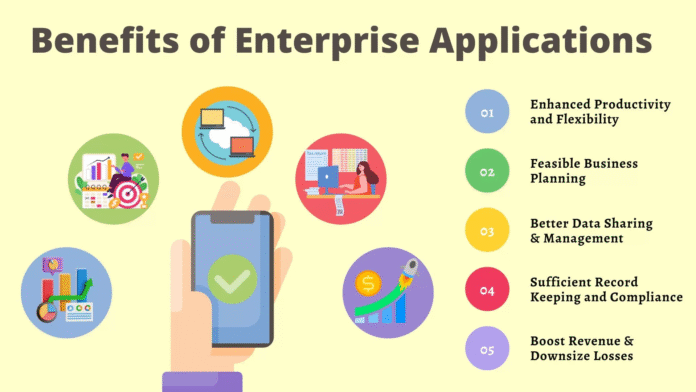
Enterprise applications, which handle everything from financial transactions to customer connections, are the foundation of contemporary corporate operations. Specialized methods that are far different from typical software validation are needed to test these complicated systems. The stakes are high; indeed, failures can destroy whole companies, millions of dollars, and consumer confidence. Extensive testing enterprise applications ensures that such important programs are available to thousands of users without compromising the integrity of data and performance under real world conditions.
- Managing Complex Integration Points
Enterprise apps are seldom isolated in reality, but they are integrated with multiple databases, external services and other systems simultaneously. The movement of data between each of these integration points should be tested to ensure that it is correct, and that it is neither lost nor corrupted. Teams look at how systems recover from network disruptions, and manage connection failures gracefully, as well as interact throughout regular operations. Coordinated testing environments that precisely replicate production architecture are necessary due to this complexity. Verifying these links helps avoid expensive failures in which a fault in one system spreads to the entire company technology ecosystem.
- Handling Diverse User Roles and Permissions
Employees in large businesses have a wide range of duties, each of which calls for certain system access and capabilities. The testing should ensure that all types of users perceive the appropriate information, perform the appropriate actions as well as experience the appropriate restrictions when trying to do something that is not authorized. This involves the creation of comprehensive test cases that involve managers, executives, front-line employees and external partners. Sensitive information is safeguarded but functionality is still available to authorized users thanks to security testing. Comprehensive role-based testing guarantees adherence to legal rules controlling data access and stops security breaches.
- Performance Under Enterprise-Scale Loads
Enterprise apps must be capable of supporting hundreds or thousands of parallel users without becoming irresponsible or ineffective. To determine the performance limits, load testing gradually adds more users as it tries to recreate the real usage patterns. Teams examine how systems respond to seasonal demand surges, month-end processing, and peak business hours. Before they affect real users, testing identifies bottlenecks in database queries, network bandwidth, or application server capacity. This proactive strategy finds optimization opportunities that sustain acceptable performance levels and guarantees sufficient infrastructure provisioning.
- Data Migration and Accuracy Verification
Large volumes of historical data must frequently be transferred from legacy systems to new platforms in order to implement corporate applications. Testing confirms that migration procedures maintain completeness, accuracy, and record relationships. Teams confirm that referential integrity is maintained, client histories are fully transferred, and financial balances reconcile accurately. Millions of records are successfully moved thanks to sample verification and automated validation processes. Errors found during testing avert disastrous data problems that could jeopardize user trust and post-deployment business operations.
- Business Continuity and Disaster Recovery
In order to sustain corporate operations, enterprise applications must be resilient against cyberattacks, and natural catastrophes, along with malfunctions of hardware. Testing looks at recovery protocols, failover systems, and backup systems in crisis scenarios. Teams confirm that recovery time goals are met, redundant systems turn on automatically, and data replication works properly. By ensuring that vital business operations continue in an emergency, this testing safeguards income streams and client connections. Vulnerabilities are found through routine disaster recovery testing before actual disasters arise.
Conclusion
Comprehensive approaches that address integration complexity, security needs, performance scalability, data correctness, and business continuity are necessary for testing enterprise applications. To guarantee dependability when supporting crucial business operations, these vital systems need to be rigorously validated across several dimensions.
Opkey gains a competitive edge with speed, accuracy and stability for testing enterprise applications. It gives you the strategic advantage you need with end-to-end enterprise application coverage, AI-powered self-healing, and no-code automation. Testing can start earlier and scale thanks to automation of manual test cases, auto-documentation of business processes, and out-of-the-box CI/CD integrations.