

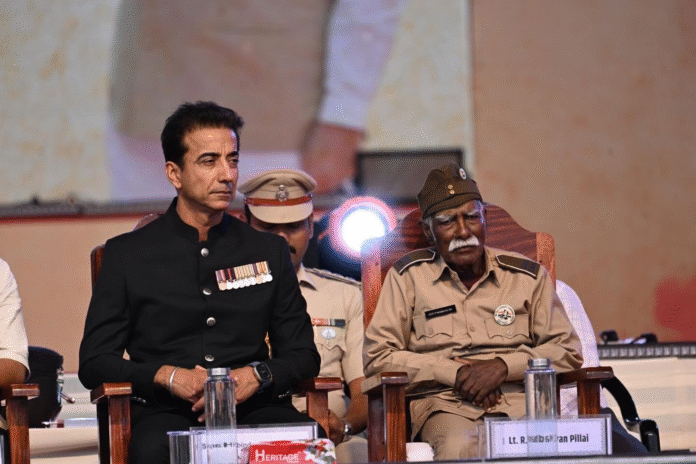
Lt. Rangaswamy Madhavan Pillai, an Indian National Army (INA) veteran, recently marked his 100th birthday by paying tribute to Netaji Subhas Chandra Bose and the fallen soldiers of the freedom struggle—men and women whose names history often forgot, but whose courage shaped a nation.
Born Abroad, But India in His Heart
Lt. Rangaswamy Madhavan Pillai was born on March 13, 1926, in Swryan township of Rangoon district in British-era Burma (now Myanmar). Like many Indians living overseas at the time, his family remained deeply connected to the motherland. His roots traced back to Sivaganga in Tamil Nadu—a region known for producing revolutionaries and patriots.
For young Madhavan, India’s freedom was not an abstract idea. It was a lived reality, discussed in community gatherings, whispered in homes, and carried in the hopes of the Indian diaspora scattered across Southeast Asia.
From Civilian Rebel to INA Officer
In 1942, as World War II reshaped global politics, Pillai joined the Indian Independence League (IIL), led by veteran revolutionary Rash Behari Bose. The League sought to unite Indians abroad and channel their energies against British colonial rule.
Everything changed in 1943, when Netaji Subhas Chandra Bose arrived in Singapore and took command of the Indian National Army. Inspired by Netaji’s electrifying leadership and call of “Chalo Delhi”, Madhavan Pillai formally enlisted in the INA on November 1, 1943.
He trained at the Officers Training School in Burma and was commissioned as an officer—transitioning from a passionate civilian activist to a soldier ready to challenge the British Empire.
Mobilising a Movement Across Burma
Lt. Pillai did not fight on the battlefield alone; his war was fought with words, persuasion, and relentless travel. As a recruitment officer and fundraiser, he moved across 32 locations in Burma, including Yangon, Swryan, Hanthawaddy, Sawbwagale, Ywadanshe and Mayongone.
From small settlements to busy townships, he rallied Indians—labourers, traders, students—to contribute money, manpower and morale to the INA. His work strengthened the backbone of Netaji’s army at a time when resources were scarce but conviction was abundant.
Behind the Frontlines and Behind Bars
Later, Lt. Pillai served in the administrative branch at the INA headquarters in Rangoon, working closely under Major General K.P. Thimayya. He coordinated logistics, managed operations and ensured that the revolutionary army functioned despite constant pressure.
But freedom came at a price.
In May 1945, as the British regained control, Pillai was arrested and imprisoned in Rangoon Jail. He remained behind bars till December that year—a period marked by hardship, uncertainty, and the collapse of the INA’s military campaign. Like thousands of others, he paid for his defiance with lost months of freedom.
Recognition After Decades of Silence
For years after Independence, INA veterans lived in relative obscurity. It was only in 1980 that the Government of India officially recognised Lt. Pillai as a freedom fighter.
In 2021, on the 125th birth anniversary of Netaji Subhas Chandra Bose, he was awarded a silver medal—an acknowledgment of a life spent in service of an idea larger than oneself.
The moment of national recognition came on January 23, 2024, when Prime Minister Narendra Modi felicitated him at the Red Fort during Parakram Diwas. Standing beneath the same walls where INA officers were once tried, Pillai’s presence symbolised a full circle of history.
A Living Link to Netaji’s Dream
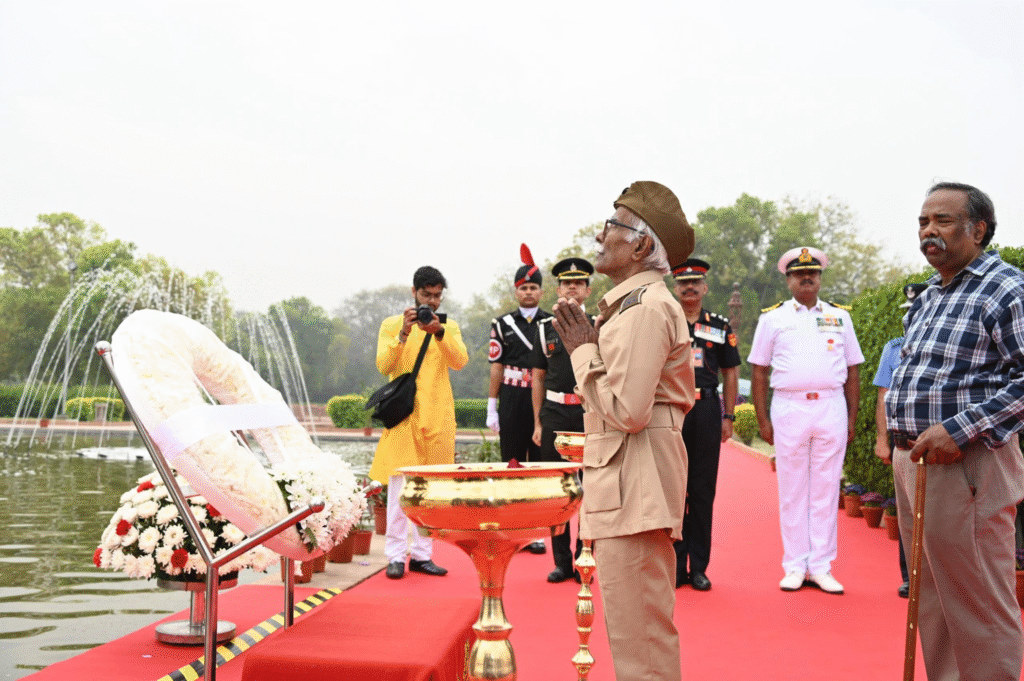
On his 99th birthday in March 2025, the Indian Army organised a solemn wreath-laying ceremony for him at the National War Memorial and the statue of Netaji Subhas Chandra Bose. Surrounded by soldiers young enough to be his great-grandchildren, Lt. Pillai stood as a living bridge between revolutionary nationalism and modern India.
The INA may not have marched into Delhi as Netaji dreamed, but its spirit shook the foundations of British rule. The Red Fort trials ignited nationwide protests and hastened the end of colonial power.
Why Lt. Pillai Still Matters
Lt. Rangaswamy Madhavan Pillai’s life is not just a personal story—it is the story of the INA itself. A movement built on courage, sacrifice and unity across borders. A reminder that India’s freedom was fought not only within its territory, but also in distant lands by Indians who never stopped believing.
At 99, he no longer carries a rifle. But every salute he offers, every wreath he lays, echoes the same message he followed as a young man:
Freedom is never gifted. It is earned—and remembered