

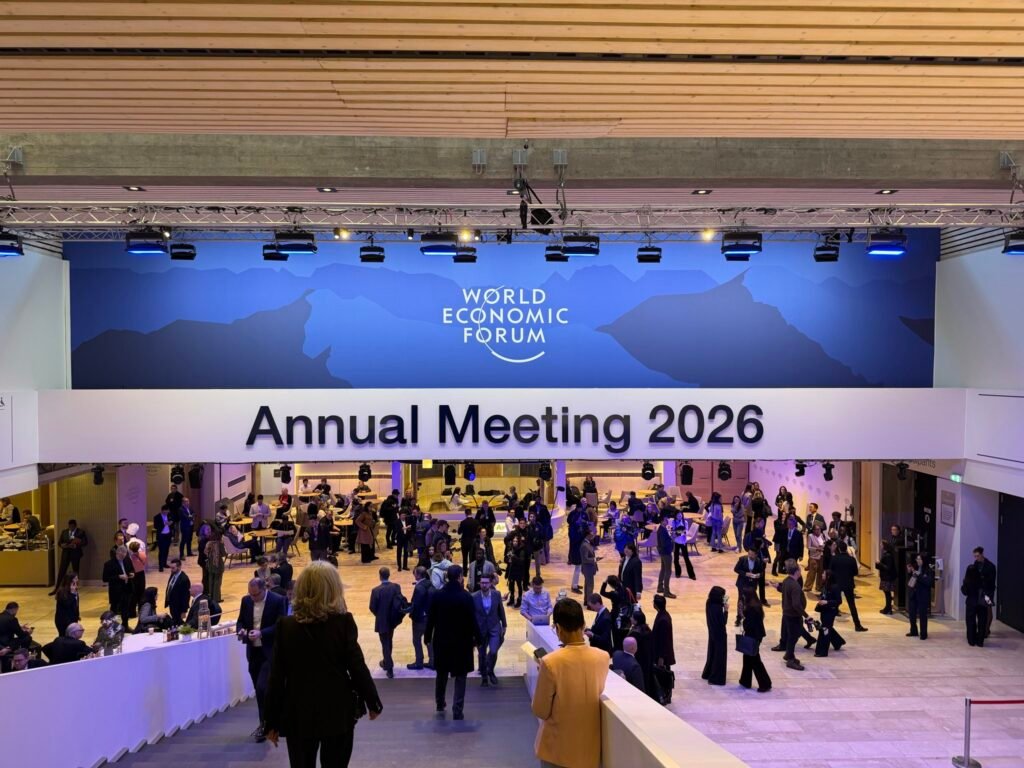
The World Economic Forum (WEF) Annual Meeting 2026 is underway in Davos-Klosters, Switzerland, bringing together political leaders, business executives, thinkers and influencers from around the world. Running from January 19 to 23, this year’s summit, the 56th edition takes place under the theme “A Spirit of Dialogue”, emphasising cooperation amid global uncertainty.
Record turnout of world leaders and top CEOs
Organisers say the scale of participation is unprecedented. Nearly 3,000 participants from over 130 countries are expected, including a record 400 senior political leaders, close to 65 heads of state and government, senior ministers, central bankers, trade officials, labour representatives and civil society figures. Leaders like US President Donald Trump, French President Emmanuel Macron, Canadian Prime Minister Mark Carney and European Commission President Ursula von der Leyen are among the high-level attendees.
The business contingent is equally significant, with almost 850 top CEOs and chairpersons and nearly 100 leading unicorn and tech pioneers attending. Big names from the technology world include executives and innovators linked with Microsoft, NVIDIA, Anthropic, Amazon and Meta, reflecting the event’s focus on innovation and economic transformation.
Agenda shaped by dialogue cooperation and global risks
This year’s WEF meeting is designed to provide a platform for dialogue on pressing economic, geopolitical and technological challenges. Organisers have emphasised the need for cooperation in areas like economic growth, investment in people, responsible innovation, and prosperity within planetary limits. Sessions will explore global economic trends, AI regulation, climate transition, geopolitical risks, public-private collaboration and strategies to unlock inclusive growth.
Why Davos matters in 2026
Davos has long been a gathering where global elites exchange ideas, shape agendas and build coalitions on issues from trade to climate change. In 2026, its significance is heightened by rising geopolitical fragmentation, technological disruption and persistent global inequality. The forum’s aspiration to create a neutral space for discussion comes at a time when dialogue rather than confrontation is seen as crucial for navigating shared challenges such as future pandemics, energy transitions and workforce shifts.
India’s expanding presence and state delegation efforts
India has sent a broad and powerful delegation to Davos, marking one of its most significant representations yet. Alongside central government ministers like Ashwini Vaishnaw, Shivraj Singh Chouhan and Pralhad Joshi, over 100 Indian CEOs including Mukesh Ambani and N Chandrasekaran are engaging with global investors and thought leaders. States such as Assam, Kerala and Maharashtra are utilising the platform to pitch investment opportunities, advance MoUs and showcase regional strengths like ease of doing business and tech innovation.
Broader impact beyond Davos slopes
While critics argue that talk often outweighs action, Davos remains influential in setting global policy discourse and connecting leaders across sectors. With hundreds of sessions livestreamed publicly and diverse voices included in debates, the Annual Meeting continues to shape how governments, businesses and civil society tackle 21st-century priorities.