

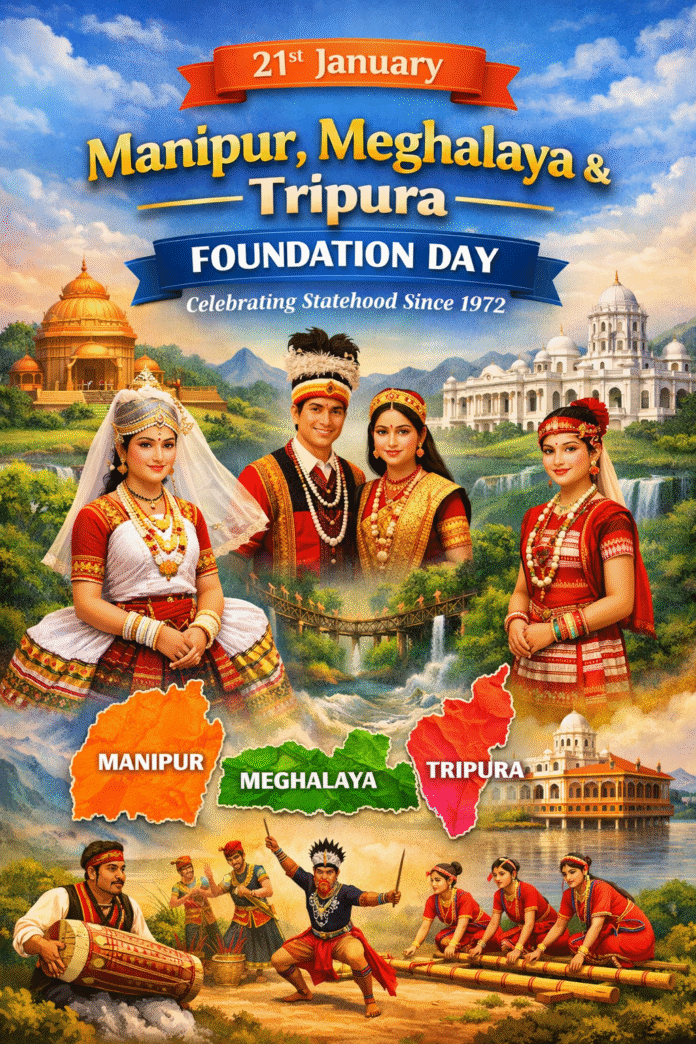
India’s northeastern region is known for its cultural diversity, rich history, and unique traditions. Every year on 21 January, the nation celebrates the Foundation Day of Manipur, Meghalaya, and Tripura, commemorating the day these three states attained full statehood in 1972. This historic occasion highlights India’s commitment to inclusive governance and respect for regional identities within the federal framework.
Foundation Day celebrations honor the journey, heritage, and aspirations of the people of these vibrant states.
Historical Background of Statehood
After independence, several regions in Northeast India were reorganized to ensure better administration and representation. Manipur, Meghalaya, and Tripura were initially governed as Union Territories or princely states before achieving full statehood.
The North Eastern Areas (Reorganisation) Act, 1971 played a key role in this transformation. As a result, on 21 January 1972, Manipur, Meghalaya, and Tripura officially became full-fledged states of the Indian Union.
Manipur Foundation Day: History and Cultural Pride
Journey to Statehood
Manipur was once an independent princely kingdom before merging with India in 1949. It became a Union Territory in 1956 and later attained statehood in 1972.
Cultural Significance
Manipur is renowned for:
- Manipuri classical dance
- Rich traditions of art, music, and martial practices
- Natural landmarks like Loktak Lake
Foundation Day celebrations in Manipur reflect pride in its cultural heritage and ongoing development.
Meghalaya Foundation Day: Identity and Tradition
Formation of the State
Meghalaya was carved out of Assam to fulfill the aspirations of its tribal communities. It first became an autonomous state in 1970 before achieving full statehood in 1972.
Unique Cultural Features
Known as the “Abode of Clouds,” Meghalaya is home to:
- Khasi, Garo, and Jaintia tribes
- A rare matrilineal social system
- Rich biodiversity and natural beauty
Foundation Day events showcase the state’s harmony between tradition and modernity.
Tripura Foundation Day: Heritage and Progress
Path to Statehood
Tripura was a princely state that merged with India in 1949. It became a Union Territory in 1956 and achieved statehood in 1972.
Cultural and Historical Importance
Tripura is known for:
- A blend of tribal and Bengali cultures
- Traditional dance forms like Hojagiri
- Historical landmarks and archaeological sites
The Foundation Day highlights Tripura’s cultural unity and developmental journey.
Importance of Foundation Day Celebrations
1. Strengthening National Unity
These celebrations reaffirm India’s unity while respecting regional diversity.
2. Preserving Cultural Heritage
Traditional music, dances, and exhibitions help preserve indigenous customs.
3. Reflecting on Growth and Development
The day offers an opportunity to review progress and set future goals.
4. Inspiring Future Generations
Foundation Day encourages youth to value their roots and contribute to state-building.
Conclusion
The Foundation Day of Manipur, Meghalaya, and Tripura, celebrated on 21 January, is a tribute to the historical journey, cultural richness, and democratic aspirations of these northeastern states. Their statehood marked an important step in strengthening India’s federal structure and inclusive growth.
As India moves forward, Manipur, Meghalaya, and Tripura continue to enrich the nation with their traditions, resilience, and contributions.