

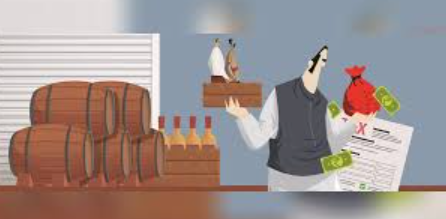
As India ushered in 2026, alcohol once again sat at the centre of celebration — and concern. An estimated 12 to 15 million cases were consumed nationwide, while cities like Mumbai had to nearly double police deployment to achieve a 37 per cent drop in drunk-driving incidents. The contrast captures a long-standing policy dilemma: alcohol is simultaneously a major source of state revenue and a significant driver of social harm. Managing this contradiction lies at the heart of one of India’s most fraught governance challenges.
Why alcohol demands state intervention
From a public policy perspective, alcohol consumption is a textbook case of negative externalities. While individuals decide how much to drink, the costs — road accidents, public disorder, domestic violence, lost productivity and pressure on public health systems — are borne by society at large. Market prices do not reflect these social costs, leading to over-consumption if left unregulated.
This market failure justifies state intervention. But the form of intervention matters. Alcohol is not comparable to narcotics that warrant blanket prohibition. In most societies, moderate consumption is a matter of personal choice. The policy objective, therefore, is not elimination, but informed and responsible consumption — achieved without over-stretching limited state capacity for enforcement.
The two levers states actually control
Indian states regulate alcohol through two broad instruments: non-price regulation and taxation.
Non-price regulation governs the context of consumption — minimum legal drinking age, outlet density, and locational norms keeping liquor shops away from schools, colleges and religious institutions. These rules matter, especially for protecting vulnerable populations, but their effectiveness depends heavily on enforcement capacity.
The heavier policy burden, however, falls on taxation. Excise duty is the principal economic tool available to states to internalise alcohol’s social costs.
Why excise duty has become fiscally indispensable
Under India’s Constitution, alcohol taxation is firmly a state subject. Since the introduction of GST in 2017 sharply reduced states’ independent tax handles, excise on alcohol has become a fiscal lifeline.
Today, excise duty accounts for anywhere between negligible levels in prohibition states to as much as 30–35 per cent of own tax revenue in places like Puducherry. Many large states now derive 15–25 per cent of their own tax revenue from alcohol. In economic terms, excise collections range from near zero in prohibition states to around 1.5–2 per cent of GSDP in high-dependence states such as Chhattisgarh and Telangana, with most states clustered between 0.5 and 1.2 per cent.
This represents a sharp structural shift over the last decade — and it lies at the root of the policy conflict.
The core contradiction: Public health versus fiscal pressure
States face a built-in tension. On the one hand, they are expected to reduce the social harms associated with alcohol. On the other, budgetary pressures push them to maximise excise revenue. The result is often a punitive, complex regulatory regime that neither meaningfully reduces harm nor creates a rational consumption environment.