

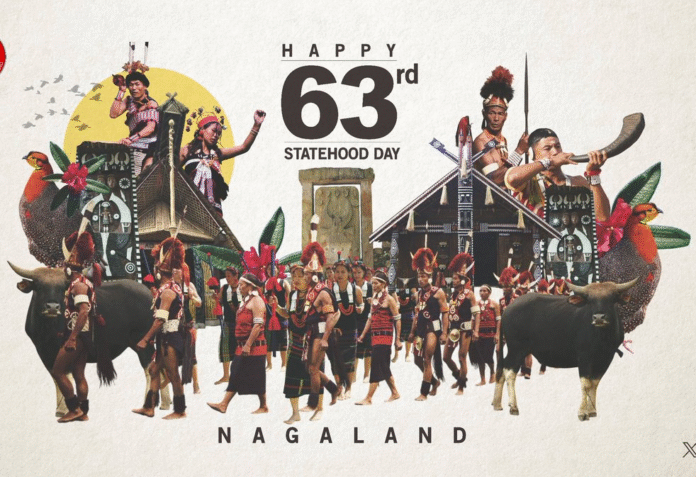
Nagaland Statehood Day is more than a historical landmark—it is a celebration of cultural identity, resilience, and pride. Home to 17 major tribes and multiple sub-tribes, Nagaland stands as one of India’s most culturally diverse regions. Its living traditions, ancestral practices, and strong community values have created a cultural tapestry that continues to evolve while honouring its timeless roots.
As Nagaland marks another year of statehood, here’s a look at seven defining cultural traditions that make the state truly extraordinary:
1. The Hornbill Festival
Often called the “Festival of Festivals,” the Hornbill Festival is one of India’s grandest cultural carnivals. Held every December, it brings all major Naga tribes together to showcase traditional dances, music, rituals, and folklore. From warrior chants to indigenous culinary experiences and handicraft showcases, the festival captures the essence of Nagaland’s cultural heartbeat.
2. Traditional Morungs
Morungs—traditional youth dormitories—remain one of the most fascinating elements of Naga heritage. Historically, they served as learning centres where boys were trained in moral values, warfare, craftsmanship, and tribal wisdom. Their architecture reflects tribal identity, decorated with symbolic carvings that represent bravery, prosperity, and community leadership.
3. Colourful Tribal Attire
Naga clothing is a striking visual expression of lineage, bravery, and social status. Handwoven shawls, elaborate beadwork, and headgear adorned with hornbill feathers, animal tusks, and handcrafted ornaments tell stories of victory, celebration, and belonging. These garments are worn with immense pride during festivals and ceremonies.
4. Log Drums
Log drums—massive instruments carved from single tree trunks—hold deep ceremonial importance. Historically used to alert villages or mark significant events, their booming rhythm now accompanies festivals, war dances, storytelling, and rituals. Each log drum is considered sacred and symbolizes unity and strength.
5. Indigenous Martial Arts & Warrior Spirit
Nagaland’s warrior history is preserved through traditional martial arts performed during cultural festivals. Spear drills, synchronized combat formations, and ceremonial war dances celebrate ancestral courage and community defence. The rituals honour Naga heritage while inspiring younger generations.
6. Distinctive Naga Cuisine
Bold, earthy, and rich with indigenous ingredients, Naga cuisine is unlike anything else in India. Signature elements include smoked pork, axone (fermented soybean), bamboo shoots, anishi (dried yam leaves), and millet-based beverages. Cooking methods—such as long-term meat smoking over kitchen hearths—reflect sustainable living and ancestral culinary wisdom.
7. Remarkable Handwoven Crafts
Craftsmanship sits at the heart of Naga culture. Handwoven shawls, bamboo baskets, cane craft, jewellery, pottery, and intricate wood carvings are expressions of identity and deep artistic legacy. Each piece—whether a bamboo artifact or embroidered shawl—carries symbolism, tribal stories, and generational knowledge.
From its warrior traditions and ceremonial drums to its cuisine, craftsmanship, and world-renowned festival culture, Nagaland stands as a living museum of heritage—timeless, resilient, and proudly unique.