

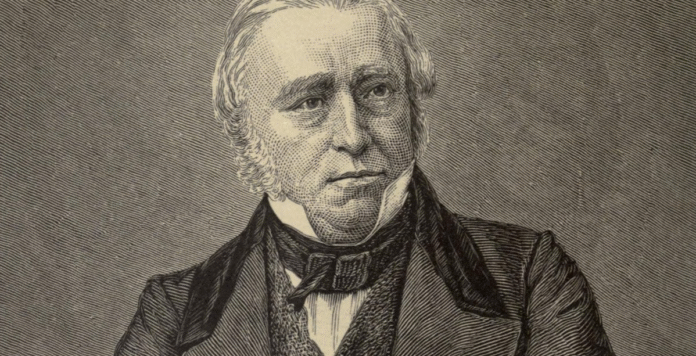
Why PM Modi says India paid a “heavy price” for one man’s philosophy. At the Sixth Ramnath Goenka Lecture, PM Narendra Modi reignited a powerful question: Did Thomas Babington Macaulay shape modern India or silently weaken its spirit? Modi called Macaulay’s mindset “his biggest crime,” accusing him of creating a class of Indians who were “Indian by appearance but British at heart.” According to the PM, this colonial psychology shattered national confidence and planted a long-lasting inferiority complex.
But who was this man whose ideas continue to guide India’s laws, schools, and mindset?
Macaulay: The Man Behind the Machinery
Early Life: A Childhood That Hardened Him
- Born: October 25, 1800
- Eldest of nine siblings
- Sent to boarding school at 13, separated from family, bullied, and emotionally scarred
Historians note these early experiences made him deeply protective of his own circle, yet harsh and uncompromising toward opponents, a duality that shaped his politics in India.
A British Politician Who Suddenly Looked East
By 1832, Macaulay threw himself into Indian affairs as the British Parliament debated the renewal of the East India Company’s Charter.
He complained that Parliament cared more about “minor English incidents” than the governance of millions in India.
The Law Reformer Who Created the IPC
Key Highlights:
- Arrived in India in 1834 as the first Law Member
- Chaired the Law Commission
- Drafted the Indian Penal Code (IPC) in 1837
- IPC came into force in 1862
- Its influence spread across almost all former British colonies
Macaulay had little courtroom experience, yet his sharp mind helped consolidate criminal law into a uniform code. Offences like “sodomy” were criminalised across the empire because of his draft.
The Education Shockwave: The 1835 English Manifesto
The biggest storm, however, came from his Minute on Education (2 February 1835).
What Macaulay Proposed:
- Create a class of Indians “English in taste, opinions, morals, and intellect.”
- Use English as the primary medium of education.
- Close or minimise funding to Persian, Arabic, and Sanskrit institutions.
- Build elite English institutions instead of mass schooling.
This decision split Indian society uplifting some, alienating millions.
Two Centuries Later… Still Debating Him
Macaulay’s fingerprints remain on:
- India’s courts
- school textbooks
- administrative structure
- the dominance of the English language
And now, nearly 200 years later, India is trying to reverse the blueprint he left behind.
Was Macaulay a moderniser or the architect of mental colonisation?
The debate is far from over.