

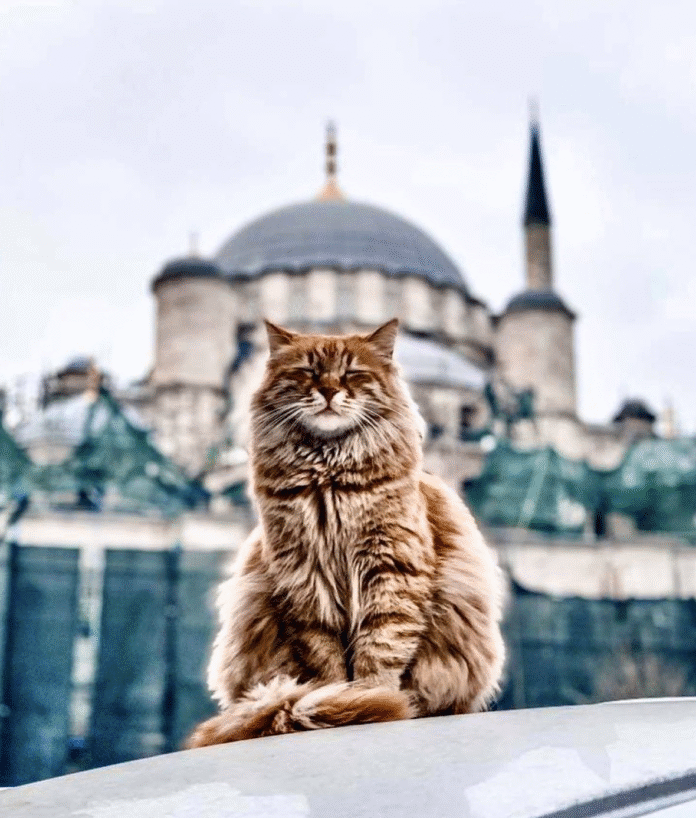
In Istanbul, the city never walks alone—because a cat is always just a step away.
Turkey’s cultural capital, spread across Europe and Asia, is home to nearly 250,000 street cats who roam freely through mosques, markets, ferries, cafés, and historic alleys. They’re not exactly pets, not quite strays—more like cherished citizens with full community rights.
Photographer Marcel Heijnen, who documented them in City Cats of Istanbul, calls them “a community treasure”. Residents feed them, shopkeepers leave bowls outside their doors, and every municipality runs free veterinary care and neutering services. Even private clinics offer discounts for street cats—proof that Istanbul’s love for felines is more than folklore.
This bond runs deep. During the Ottoman era, the city even had official mancacıs—“cat sitters”—whose job was to feed and protect street cats. And long before that, Phoenician and Ottoman traders brought cats aboard ships to guard precious goods from rodents, creating centuries of coexistence.
Today, visitors find Istanbul’s cats everywhere: sunbathing on ancient walls, curled up on metro seats, or rolling atop yellow taxis. In a bustling city of 15 million, they offer the softest pauses—quiet companions who turn chaos into calm.
When an Istanbul cat hops into your lap amid the aromas of kebab, saffron and grilled corn, the city suddenly feels gentler. That’s why many call it not just Istanbul, but “Catstanbul”—a city shared by humans, history and a purring population that truly rules the streets.