

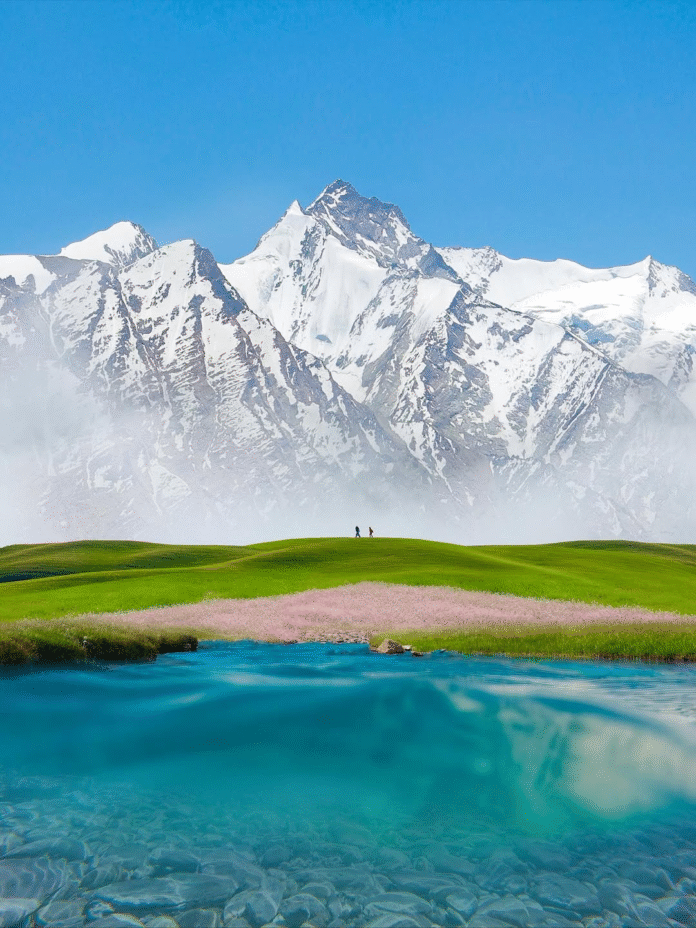
Spiti: Know why UNESCO declared this Himalayan wonder a global ecological treasure
Himachal Pradesh’s breathtaking Spiti Valley has etched its name in history — becoming India’s first Cold Desert Biosphere Reserve, officially recognized by UNESCO in September 2025.
Spread across 7,770 sq. km in the Trans-Himalayan region, this high-altitude desert — perched between 3,300 and 6,600 meters above sea level — is as extreme as it is enchanting. Despite freezing temperatures, arid winds, and minimal vegetation, Spiti thrives as one of the most unique ecosystems on Earth.
The Harsh Beauty of a Cold Desert
Spiti’s rugged landscape may appear barren, but it’s bursting with life uniquely adapted to its icy terrain. The valley shelters snow leopards, Himalayan blue sheep (bharal), and golden eagles, among other rare species that survive in sub-zero conditions.
Equally inspiring are the indigenous Himalayan communities who have lived here for centuries — preserving a deep bond with nature through traditional farming, architecture, and water-management practices. Their resilience and eco-friendly way of life are central to Spiti’s identity.
UNESCO’s Global Recognition
The UNESCO designation was announced during the Man and the Biosphere (MAB) Programme meeting in Hangzhou, China. With this honour, Spiti joins 12 other Indian biosphere reserves and more than 700 sites worldwide committed to sustainable coexistence between humans and nature.
This recognition will boost conservation research, eco-tourism, and global partnerships, positioning Spiti as a model for balancing biodiversity with traditional livelihoods.
Zones of the Spiti Cold Desert Biosphere Reserve
The biosphere reserve is divided into three distinct zones for preservation and sustainable development:
- Core Zone (2,665 sq. km): Includes Pin Valley National Park and Kibber Wildlife Sanctuary, where conservation is paramount.
- Buffer Zone (3,977 sq. km): Limited human activity permitted under strict ecological guidelines.
- Transition Zone (1,128 sq. km): Focused on sustainable tourism, handicrafts, and community-based livelihoods.
A Balance Between Nature and Humanity
Spiti’s recognition as India’s first Cold Desert Biosphere Reserve is not just about protecting landscapes — it’s about celebrating coexistence. The valley stands as a symbol of how traditional wisdom, when aligned with global conservation goals, can preserve one of Earth’s most fragile ecosystems for generations to come.