

(image: gaatha.com)
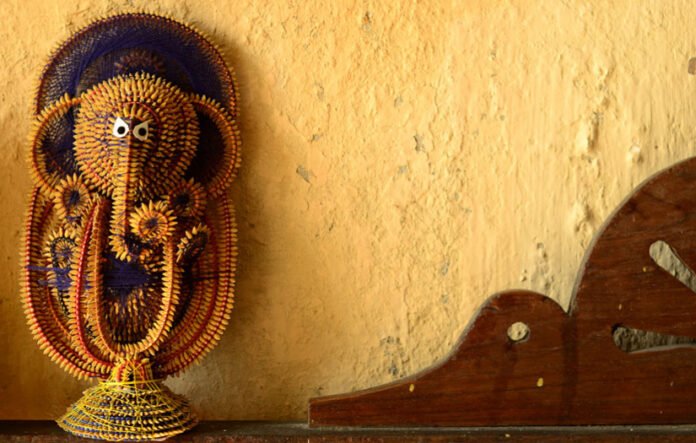
In the heart of Madhya Pradesh’s forests, where the rustle of bamboo meets the rhythm of tribal drums, a quiet miracle unfolds—Dhaan Murti Kala, the art of sculpting divine and everyday forms using bamboo sticks and paddy grains. This isn’t just craft. It’s culture woven with nature, a tradition passed down by tribal communities like the Gond, Baiga, and Korku, who treat bamboo not as material, but as memory.
Where It Happens
The art thrives in tribal belts of Mandla, Dindori, Balaghat, and Betul, where bamboo grows wild and abundant. These regions are home to the Gond and Baiga tribes, known for their deep connection to the forest and their vibrant visual storytelling.
Who Makes It
- Baiga Tribe: Known for their spiritual worldview, they often create murti (idols) of deities and animals using bamboo and paddy.
- Gond Tribe: Famous for their Gond paintings, they also practice bamboo craft, making ritualistic and decorative figures.
- Korku Tribe: Skilled in bamboo weaving, they contribute to the structural finesse of Dhaan Murti forms.
These artisans are often women and elders, who gather bamboo, split it into fine strips, and bind it with paddy grains to form Ganesh idols, birds, elephants, and human figures. The process is meditative, often accompanied by folk songs.
How They Make It
- Harvesting Bamboo: Selected for flexibility and strength.
- Splitting & Shaping: Using knives and handmade tools, bamboo is sliced into thin strips.
- Binding with Dhaan (Paddy): Paddy grains are used to decorate or fill the forms, symbolizing prosperity.
- Forming Shapes: From gods to animals to abstract forms, each murti tells a story.
- Drying & Preservation: The final piece is sun-dried and sometimes coated with natural oils.
These murtis are often used in festivals, rituals, and local fairs, especially during Ganesh Chaturthi and harvest celebrations