

(image : thepagez)
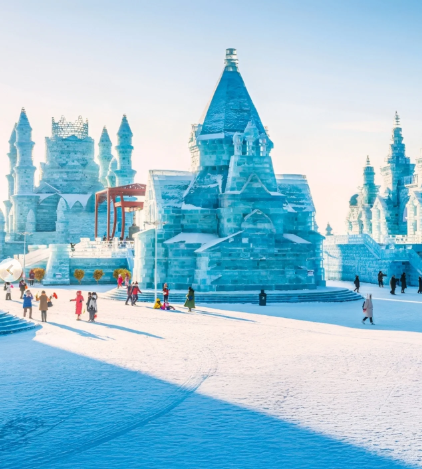
Every winter, the city of Harbin in China’s Heilongjiang Province transforms into a spectacular frozen world during the Harbin International Ice and Snow Sculpture Festival. Known as China’s “Ice City,” Harbin hosts one of the largest and most impressive winter festivals on the planet, drawing millions of visitors with its breathtaking ice architecture, glowing lights, and rich cultural displays.
A Festival Born of Tradition
The festival was first held in 1963 and later relaunched in 1985 after a brief pause. Since then, it has grown into a massive international event that typically begins in early January and runs through late February, depending on weather conditions. With winter temperatures often dropping below -38°C (-36°F), Harbin’s extreme climate provides the perfect environment for creating and maintaining massive ice and snow structures.
Main Attractions
- Ice and Snow World is the largest attraction, covering over 600,000 square meters. It features towering ice castles, full-scale replicas of famous landmarks, and intricate sculptures built from blocks of ice harvested from the Songhua River. At night, these structures are illuminated by millions of colorful LED lights, creating a surreal, glowing landscape.
- Sun Island Scenic Area hosts the International Snow Sculpture Art Expo, showcasing finely detailed sculptures made from compacted snow. These works often depict scenes from Chinese mythology, nature, or world culture, and highlight the artistry of snow carving.
- Zhaolin Park, one of the festival’s oldest venues, is famous for its Ice Lantern Garden Party. Here, hundreds of smaller ice sculptures and glowing lanterns line the paths, offering a magical and family-friendly experience.
Artistry and Engineering
Over 180,000 cubic meters of ice and 150,000 cubic meters of snow are used each year. Thousands of skilled workers and artists—many of them participants in global ice carving competitions—spend weeks shaping the materials using traditional tools like chisels and saws. Modern lighting and design technology enhance the sculptures, especially after dark, turning the entire city into a luminous winter spectacle.

Economic and Cultural Impact
Harbin invests more than $500 million annually in the festival’s construction, lighting, and maintenance. This significant investment reflects the festival’s global status and its importance to local tourism and economy. With up to 18 million visitors each season, the festival is not only a celebration of winter but also a major driver of regional development.
Tips for Visitors
Due to the extreme cold, visitors should dress in layers with insulated jackets, gloves, hats, and boots. In addition to the ice sculptures, guests can enjoy snow sports, ice swimming, and local foods like Harbin sausages and candied hawthorn skewers. Blending creativity, culture, and engineering, the Harbin Ice and Snow Festival offers a once-in-a-lifetime experience and stands as a shining example of what can be achieved in even the coldest conditions.