

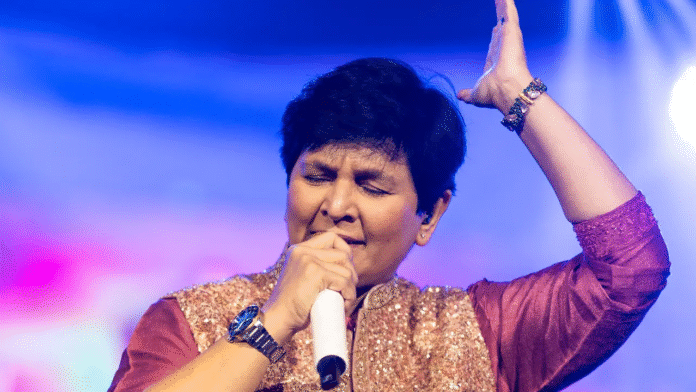
As the beats of the dhol reverberate through the air and cities across India shimmer with colour during Navratri, one voice continues to dominate the celebrations year after year — Falguni Pathak, lovingly crowned the “Dandiya Queen”. With her unique blend of traditional Gujarati folk, catchy pop melodies, and unmatched live energy, Falguni has become a cultural icon whose music transcends generations.
Humble Beginnings in Mumbai
Born on March 12, 1969, in Mumbai, Falguni Pathak was the youngest of five sisters in a traditional Gujarati family. Music flowed naturally in the household, and Falguni was drawn to it from a young age. However, her musical journey wasn’t always smooth — her father initially disapproved of her passion. But her determination outshone resistance. Her first brush with the stage came when she was just nine years old, performing on Independence Day for a local event. She was paid ₹25 for that performance — a small amount, but a monumental beginning. From there, there was no looking back.
Finding Her Sound
In the late 1980s, Falguni began performing with a local dandiya group called The Beaterzz. Her natural flair for folk music and her soulful, folksy voice started catching attention. By the mid-90s, she formed her own band called “Ta Thaiya”, laying the foundation for her signature sound — a fusion of traditional Gujarati garba rhythms with contemporary pop arrangements. Her music started gaining popularity not just for dance performances but also for its emotional and relatable lyrics.
The Breakthrough: Yaad Piya Ki Aane Lagi
Falguni’s big break came in 1998 with the release of her debut album “Yaad Piya Ki Aane Lagi”. The song, paired with a nostalgic music video, became an instant hit. It wasn’t just a musical success — it became an anthem for a generation. Following this, a string of successful tracks like “Maine Payal Hai Chhankai”, “Chudi Jo Khanki Haathon Mein”, and “Meri Chunar Udd Udd Jaye” cemented her place in the Indian pop and folk music scene. These songs were not just chartbusters — they became Navratri essentials.
Rise of the Dandiya Queen
What truly set Falguni Pathak apart was her deep connection to the festival of Navratri. Every year, she would perform live during the nine-night festival, especially in Mumbai, where her dandiya shows became iconic. Venues like Borivali’s Pushpanjali Gardens would see thousands flocking to dance to her tunes. Her performances are more than concerts — they are cultural events. Her live band, colorful traditional outfits, and the sheer joy she brings to the stage make every show memorable. The consistency of her presence, her unique voice, and her deep respect for Gujarati culture earned her the affectionate title of “Dandiya Queen” — a crown she has worn for over two decades.
A Symbol of Cultural Pride
Falguni Pathak’s appeal goes beyond music. She represents authenticity, tradition, and empowerment. In an era where many artists chase Bollywood fame, Falguni chose a different path — one rooted in live performance, community, and celebration. Her androgynous style, warm persona, and refusal to conform to typical industry standards have also made her a role model for many — especially young women seeking to break stereotypes.
Today, she continues to perform across the world, from New Jersey to Nairobi, proving that the love for garba and dandiya knows no border. More than just a singer, Falguni Pathak has become a tradition. Her music plays in every household, society event, and garba ground during Navratri. For many, Navratri isn’t complete without dancing to her hits at least once.
She once said in an interview:
“When people call me ‘Dandiya Queen’, I feel proud. But more than the title, I feel joy when I see thousands dancing to my music — that’s my biggest reward.”
In a world of fleeting fame and viral sensations, Falguni Pathak’s story is one of perseverance, passion, and cultural pride. She turned her love for folk music into a phenomenon, and in doing so, became the voice of one of India’s most beloved festivals. As the lights go up and the beats begin each Navratri, one thing is certain — Falguni Pathak will once again reign as the Dandiya Queen