

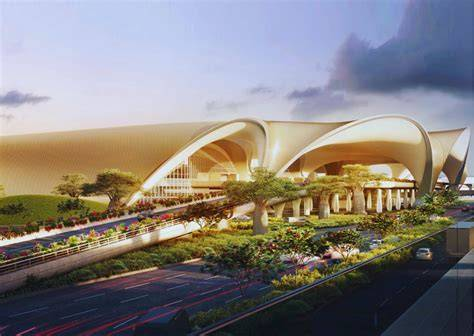
In the heart of Maharashtra’s booming coastline, a lotus is about to bloom—and it’s not just symbolic. The Navi Mumbai International Airport (NMIA), officially named Loknete DB Patil Navi Mumbai International Airport, is set to redefine India’s aviation landscape with its dramatic design, cutting-edge infrastructure, and transformative regional impact.
What Makes NMIA Special?
1. A Second Gateway to Mumbai
- Designed to ease the load on Chhatrapati Shivaji Maharaj International Airport, NMIA will serve as Mumbai’s second major airport.
- Strategically located between Ulwe and Panvel, it connects seamlessly to South Mumbai via the Atal Setu (MTHL) and the upcoming Ulwe Coastal Road, which literally lands inside the airport campus.
2. Lotus-Inspired Architecture
- The terminal, crafted by Zaha Hadid Architects, draws inspiration from the lotus flower—India’s symbol of purity and resilience.
- Expect light-filled spaces, intuitive wayfinding, and a design that blends heritage with futuristic elegance.
3. Phased Powerhouse
- Phase 1 will handle 20 million passengers annually and 0.5 million tonnes of cargo.
- Full capacity aims for a jaw-dropping 90 million passengers per year, making it one of the largest in Asia.
4. Multimodal Connectivity
- NMIA isn’t just an airport—it’s a hub. Integrated with metro, rail, road, and sea links, it promises frictionless movement for travelers and cargo alike.
5. Greenfield Brilliance
- Built from scratch (greenfield), NMIA avoids legacy constraints and embraces smart systems, sustainable design, and digital-first operations.
What’s New, What’s Next
Opening Date: Projected for 30 September 2025, with phased operational trials to follow.
Passenger Costs: Interim User Development Fees (UDF) are set—₹620 for domestic departures, ₹1,225 for international, subject to change post March 2026.
Final Touches: Civil works are nearly complete. Interior fit-outs, safety checks, and systems integration are in full swing
NMIA isn’t just infrastructure—it’s aspiration made concrete. It signals India’s readiness to host global traffic, boost regional economies, and offer travelers a world-class experience rooted in Indian identity.