

Image Credit: Getty
Drones are rewriting the Everest cleanup story — lifting tons of garbage and gear, cutting costs, and saving lives. By blending technology with sustainability, they are helping protect the world’s tallest peak while easing the burden on climbers and sherpas.
A Sky-High Trash Problem
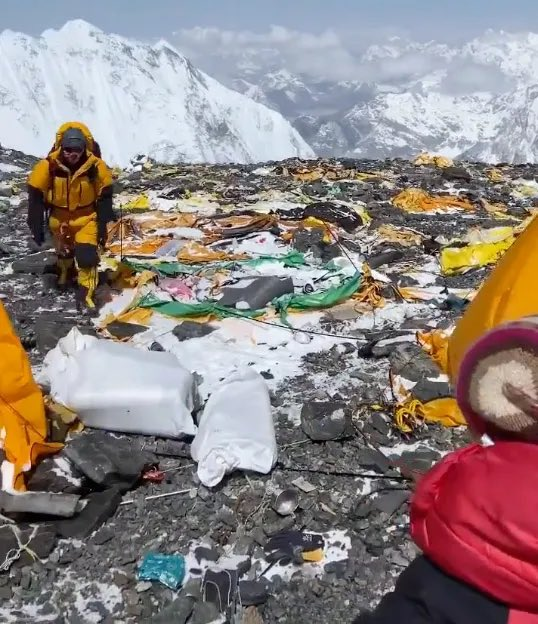
Mount Everest, once the symbol of unspoiled beauty, now struggles with an ugly label: “the world’s highest dumpster.” Decades of expeditions have left behind heaps of cans, bottles, oxygen cylinders, tents, and climbing gear.
Until now, cleanup relied on manpower or helicopters — both risky and expensive. “The only options were helicopters and manpower, with no option in between,” said Raj Bikram Maharjan of Nepal-based Airlift Technology, the company pioneering drone use on Everest.
This spring, two DJI FC 30 heavy-lift drones flew missions from Base Camp to Camp 1 at 6,065 meters, hauling 300 kilograms (660 pounds) of waste in record time.
Last year’s pilot run on nearby Mount Ama Dablam proved the concept, removing 641 kilograms of trash. Encouraged by the success, Everest authorities gave drones the green light.
“This is a revolutionary drive in the mountains to make them cleaner and safer,” said Tashi Lhamu Sherpa, vice chairman of the Khumbu Pasang Lhamu Rural Municipality.
Faster, Safer, More Affordable
Compared to human teams, drones are rewriting efficiency.
“In just 10 minutes, a drone can carry as much garbage as 10 people would take six hours to carry,” said Tshering Sherpa, head of the Sagarmatha Pollution Control Committee.
Each drone costs around $20,000, but manufacturers partly subsidize the effort as a branding opportunity, while local authorities cover the rest.
Beyond Trash: A Lifeline for Climbers
The drones are also lightening the load for climbers, ferrying oxygen cylinders, ropes, and ladders across the treacherous Khumbu Icefall — one of Everest’s deadliest sections.
“People in the fixing team were very happy,” said 19-year-old record climber Nima Rinji Sherpa. “The drone can carry ladders or oxygen, saving huge time and energy.”
Expanding Horizons
Next month, Airlift Technology plans to deploy drones on Mount Manaslu, the world’s eighth-highest peak.
“It’s not just in war that drones are useful,” Maharjan said. “They can save lives and protect the environment. For climate and humanitarian work, this technology is going to be a game changer.”
As Everest’s 2025 season showed, technology — when applied wisely — can safeguard even the harshest landscapes while protecting the people who dare to explore them. ( Inputs from AFP)