

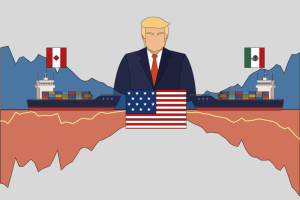
The reimposition of tariffs by Donald Trump in 2025 has become a defining feature of his second presidential term. Seven months into his return to office, these measures have reshaped the economic landscape of the United States. While the administration initially projected resilience, the broader effects on inflation, growth, employment, and currency strength point to a more complex and uneven reality
Reciprocal Tariffs
Reciprocal tariffs are duties imposed on imports to match or counter tariffs levied by other countries. Unlike tariffs regulated through the World Trade Organization (WTO), these measures are enacted unilaterally by executive order. Since January 2025, the effective US tariff rate on imports has surged from about 2.5% to between 9.1% and 18.6%, depending on methodology. This escalation has raised import costs and disrupted global trade flows.
Stock Market Performance and Economic Signals
Financial markets reflect a divided economy. The NASDAQ 100, buoyed by large technology firms, has climbed more than 10% in 2025. In contrast, broader benchmarks tell a less optimistic story: the S&P 500 and Dow Jones Industrial Average have advanced only modestly, the Dow Jones Transportation Average has declined, and small-cap stocks have stagnated. This divergence underscores the uneven impact of tariffs across sectors, with tech thriving while many traditional industries face headwinds.
Inflationary Pressures
Tariffs feed inflation both directly, through higher import costs, and indirectly, by giving domestic producers scope to raise prices. Since April 2025, retail inflation—measured by personal consumption expenditures (PCE)—has risen from near the Federal Reserve’s 2% target to roughly 3%. Producer price inflation has also accelerated, signaling further consumer price pressures ahead. Higher inflation erodes purchasing power and complicates the Fed’s policy outlook.
Monetary Policy Challenges
The Federal Reserve entered 2025 aiming to cut interest rates to support growth. Rising inflation linked to tariffs, however, has forced a pause. Minutes from the Fed’s August 2025 meeting highlight concern that tariff-driven price increases could mask underlying inflation trends. This delay in easing monetary policy has slowed expansion, illustrating the unintended macroeconomic consequences of tariff escalation.
Slowing Growth
The US economy’s momentum is visibly weakening. After GDP growth of nearly 3% in both 2023 and 2024, forecasts now project just 1.9% for 2025 and 1.2% for 2026. Tariff-related cost increases and weaker demand are key drivers of this slowdown. Economists warn that the risk of stagflation—sluggish growth combined with elevated inflation—is becoming increasingly plausible.
Employment Trends
Labor market resilience is also waning. Job creation slowed through 2025, and unemployment has edged upward amid inflationary pressures and heightened uncertainty. The Bureau of Labor Statistics reported disappointing employment figures by midyear, triggering political fallout for the administration. The combination of weaker hiring and tighter monetary policy has magnified the drag of tariffs on the real economy.
The Dollar’s Global Position
The US dollar—long a cornerstone of global economic dominance—has softened against major currencies including the euro, yen, and pound. This depreciation reduces Americans’ purchasing power abroad and complicates trade balances. While some exporters benefit from a weaker dollar, the broader decline challenges assumptions about the durability of US financial supremacy.