

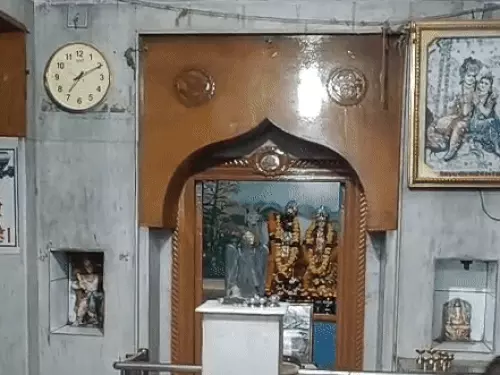
In the heart of Jalore lies a historic temple, believed to be around 750 years old, that has long served as a sacred center for social justice and unity. Located in Badi Pol area, the Radha-Krishna temple, also known as Thakur Dwara, is more than just a place of worship—it’s a pillar of tradition and collective decision-making for the Mali community of 48 villages.
A Temple That Decides Justice
For centuries, important social decisions affecting the community have been made here, with both parties in a dispute accepting the verdict given in the presence of the Radha-Krishna idol, considered a divine witness. Even today, many major societal issues and disputes are resolved within these temple premises, continuing a legacy of trust and consensus.
A Historic Legacy Without Documentation
While there are no inscriptions or documents detailing the temple’s origins, Bhomaram, President of the Mali Samaj Thakur Dwara Seva Sansthan Panch Patti, asserts that the temple dates back to the 15th century. The idol of Radha-Krishna housed within the temple is believed to be as old as the structure itself.
Despite the passage of time, the temple has retained its grandeur. Its thick 3.5-foot walls resemble those of the famed Jalore Fort, indicating its historical and architectural significance.
Center of Collective Identity
The temple serves as a central institution for the Mali community across 48 villages. In earlier times, any dispute within these villages was brought before a council of Panchs (elders), who deliberated and delivered verdicts inside the temple—always in front of the sacred idol. The decisions were binding and respected by all, reinforcing a strong sense of justice and accountability within the community.
Even though each of the 48 villages now has its own temple, collective decisions on matters of social policy, development, or major disputes are still taken at Thakur Dwara, preserving its role as the spiritual and social hub.
Janmashtami Celebrations
The temple takes on a particularly festive look during Krishna Janmashtami. The premises are beautifully decorated, and the celebrations include bhajan sandhyas (devotional music evenings) and a grand Janmotsav (celebration of Krishna’s birth). It’s a time when community members from all 48 villages come together in devotion and unity.
The Radha-Krishna temple of Jalore is not only a revered religious site but also a living testament to the community’s faith in tradition, justice, and collective wisdom. Its continued relevance across centuries makes it a unique example of how ancient institutions can still play a vital role in modern community life.